


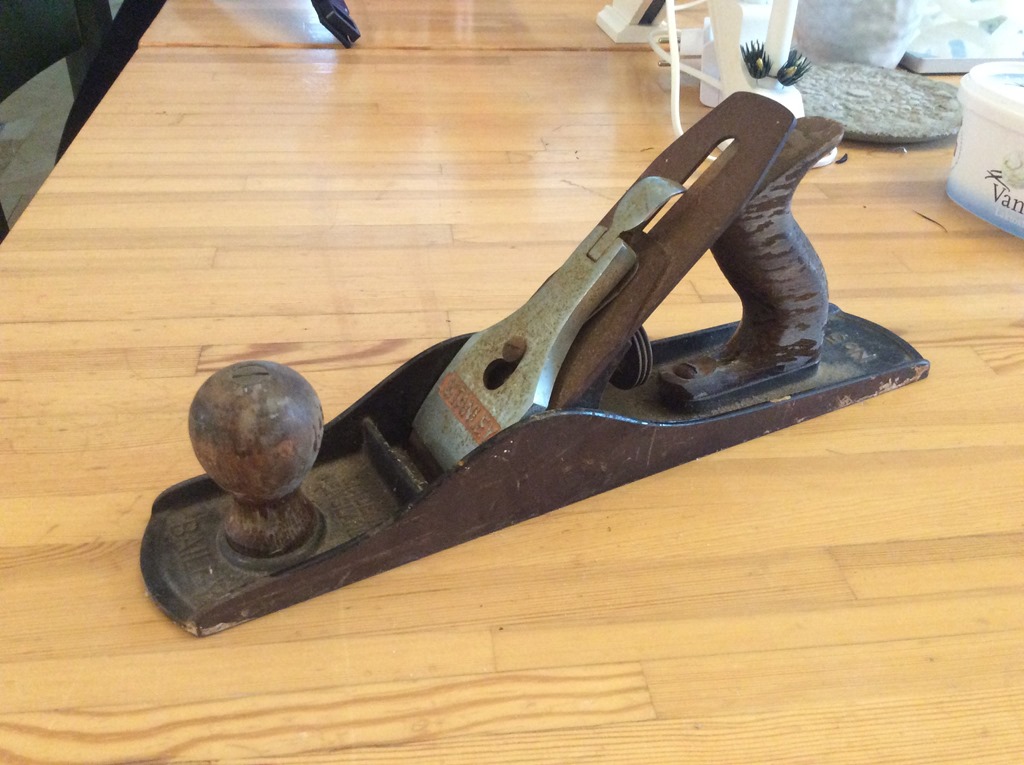
I often wonder how old a plane really is. I find it fascinating to be able to use tools that may be over a hundred years old and still in good condition. One of my absolute favourite planes is a Stanley 608 Bed Rock from the early 1900s. So I thought I would write a little about how to go about dating your plane, and at the same time give some input to Jonatan, who asked about the plane in the picture.
I usually use the flowchart at "Hyperkitten", which is based on Patrick Leach's type study of the Stanley No. 4. It draws on the changes made over time to the size of the front knob, the number of patent dates, the appearance of the frog and so on. Incidentally, that is where descriptions like "Type 11" come from.
Other details include how the frog sits on the sole. Here are two No. 7s waiting to be fixed. The lower one is a Type 7 and the upper one a Type 9. You can clearly see the difference in construction, and that the older one has a much larger bearing surface.
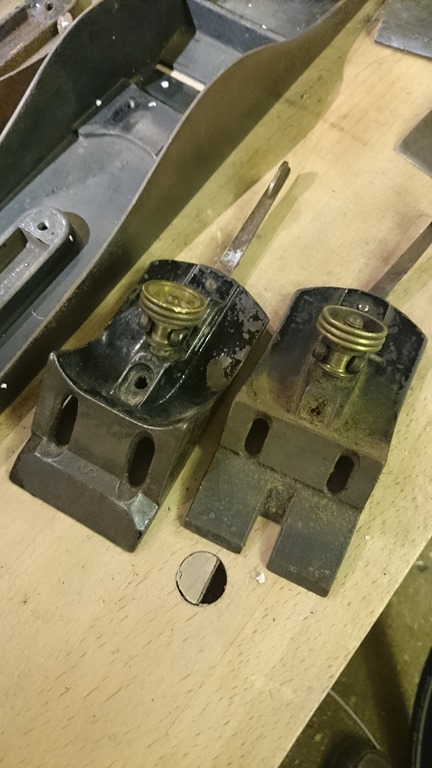
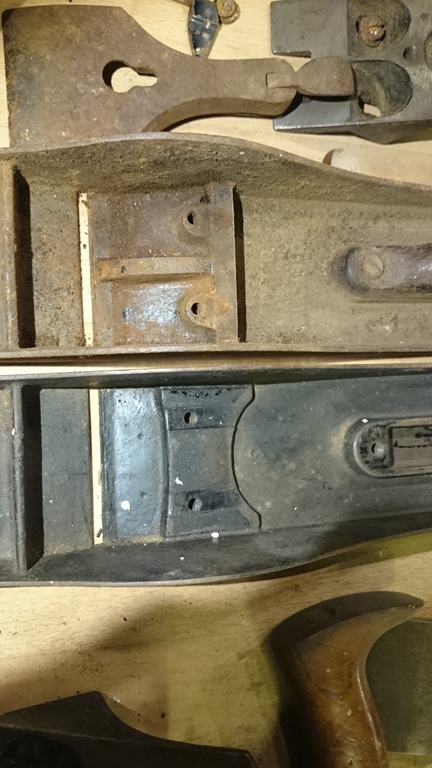
However, Jonatan's plane was made in England, so the type study does not apply. It only covers US-made Stanley planes.
We can say it was made no earlier than 1937, when Stanley began making tools in England. A user called zitan on an Australian woodworking forum sums up the only type study of English Stanleys I have seen like this:
Type 1: 1937–1939
Type 2: WW2, hard rubber adjusting nuts
Type 3: Postwar – steel bits
Type 4: Whenever those rib thingys appear on the beds (about 1972)
Type 5: Whenever the beds are marked 12-00X?
Type 6: 1983–present. The G12-00X planes
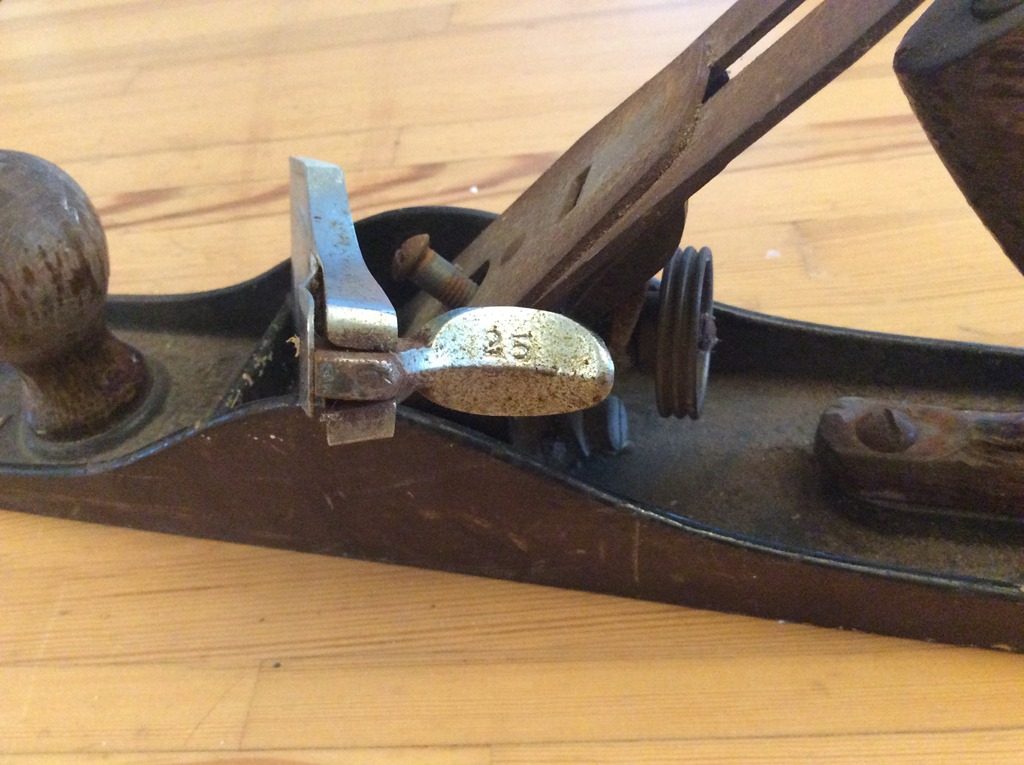
Jonatan's plane appears to have a brass adjusting nut and no cast ribs at the tote, so it is probably from 1937–1939.
If you happen to have found a Stanley from Australia, the Hand Tool Preservation Association of Australia can guide you. If you have a Record instead, turn to David Lynch's site on Record planes.
Share this content