

Veritas planes from Canada are designed to work better rather than to be cheap to make: better adjustment and feed, measures against blade chatter and a choice of three blade steels.
Materials and design
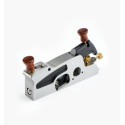
All Veritas plane bodies are stress-relieved ductile cast iron, which is dimensionally stable and takes hard knocks without cracking. Parts are machined to tight tolerances for a precise fit, and the soles are milled and surface ground, flat and square to the sides.
Most bench planes have wide side wings for stable shooting and a large hardwood front knob and rear tote. Most also have a Norris-type combined feed and lateral adjustment. On bench, shoulder and block planes (except the apron plane), set screws in the sides keep the blade in place when it meets a knot.
O1, A2 or PM-V11 blades
O1 is oil-quenched to Rc58–60. It is the easiest to sharpen but also dulls sooner.
A2 is air-quenched to Rc60–62. It holds an edge longer than O1 but takes more effort to sharpen.
PM-V11 (Rc61–63) is Veritas’s own powder-metallurgy steel. Its fine, consistent grain resists both impact and wear far better than O1 and A2, holds an edge at least twice as long as A2 and is as easy to sharpen as A2.
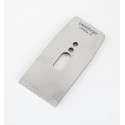
Blade faces are lapped flat to 0.0005" (0.013 mm) or better over the working surface. The bevel should be honed before use. Scrub, scraper, router and flush plane blades and A2 toothed blades are not lapped.
See our range: Veritas Planes
Share this content