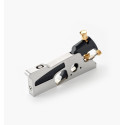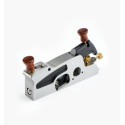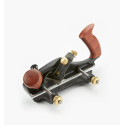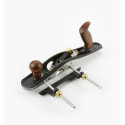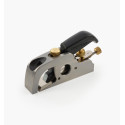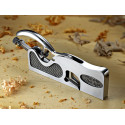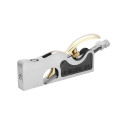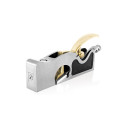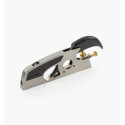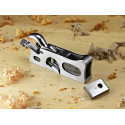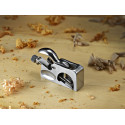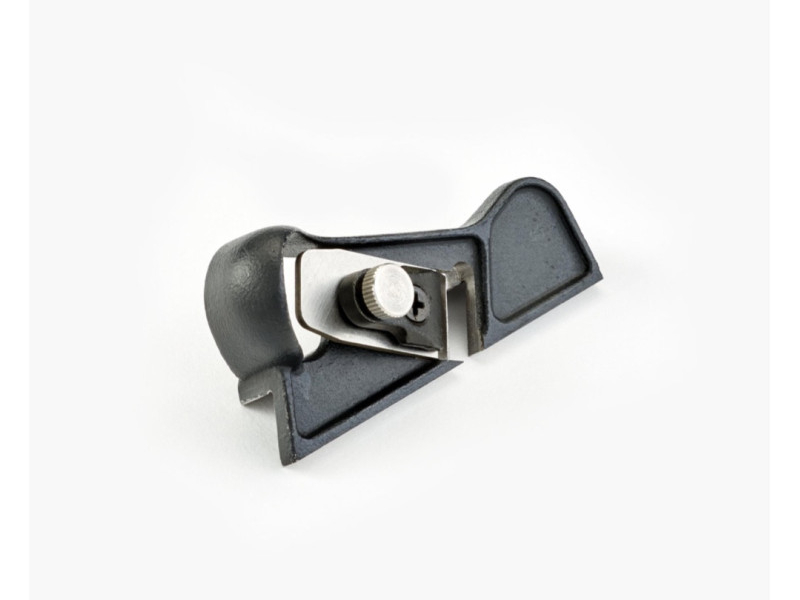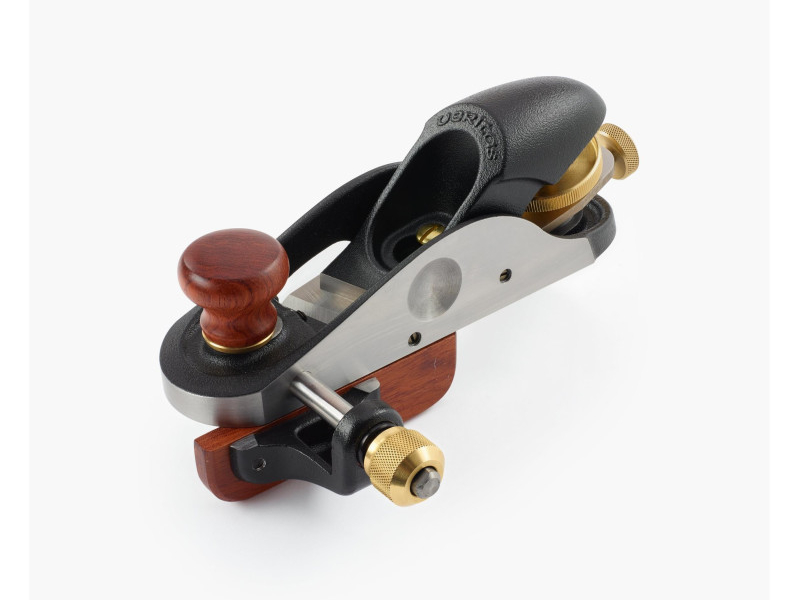
The shoulder plane and the rebate plane look similar but do different jobs. On both the blade goes right out to the side of the body, so you can plane tight up against a raised edge, but they are made for work in different directions to the grain.
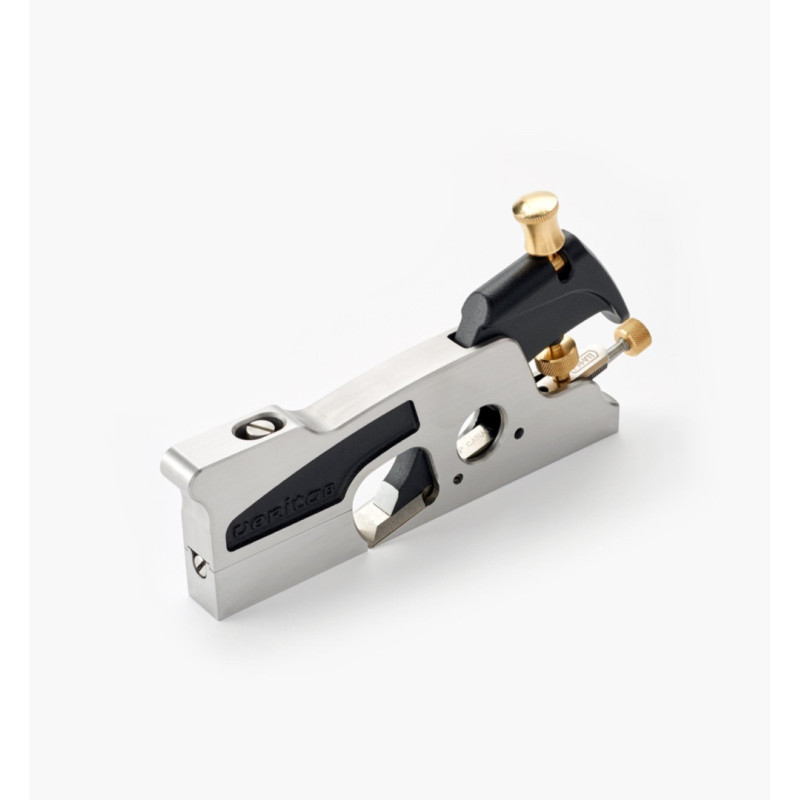
The shoulder plane
The shoulder plane's blade goes right out to both sides of the body, so you can plane tight against a raised edge, for example in an inside corner. It is used mainly to adjust tenons and shoulders, across the grain, but can also be used to fine-tune rebates until the joint fits.
Shoulder plane or rebate plane?
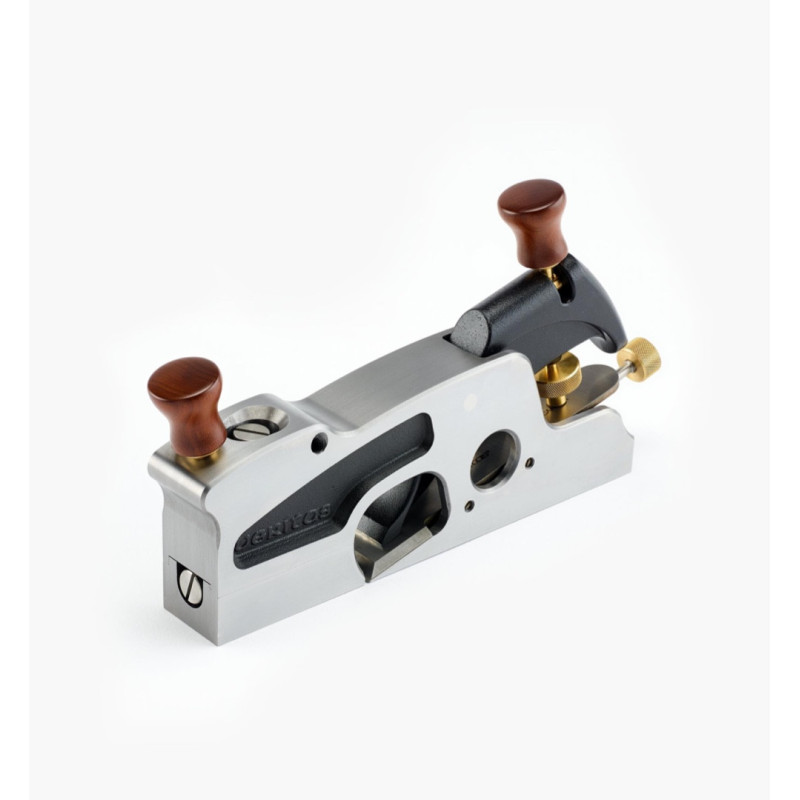
Shoulder plane
Mainly across the grain: trimming tenon shoulders and cheeks, and fine-tuning rebates.
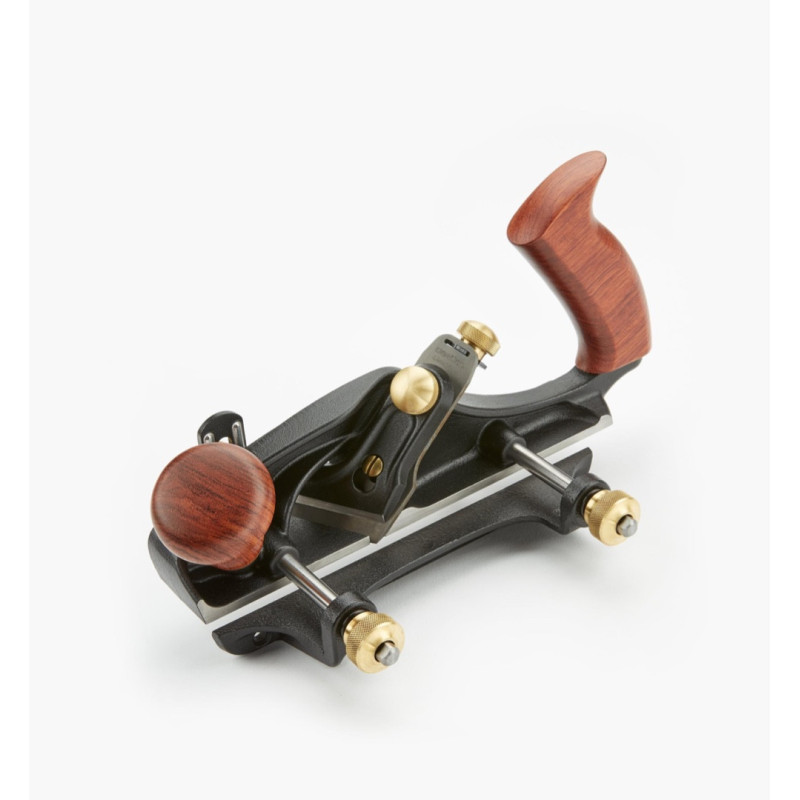
Rebate plane
Mainly along the grain, often with a nicker that helps across the grain and a fence and depth stop.
They complement each other
The Veritas skew rabbet plane has its blade skewed at 30°, which lowers cutting resistance, improves chip clearance and pulls the fence against the work. A nicker in front of the blade reduces tear-out across the grain. It cuts rebates up to 38 mm wide and 19 mm deep.
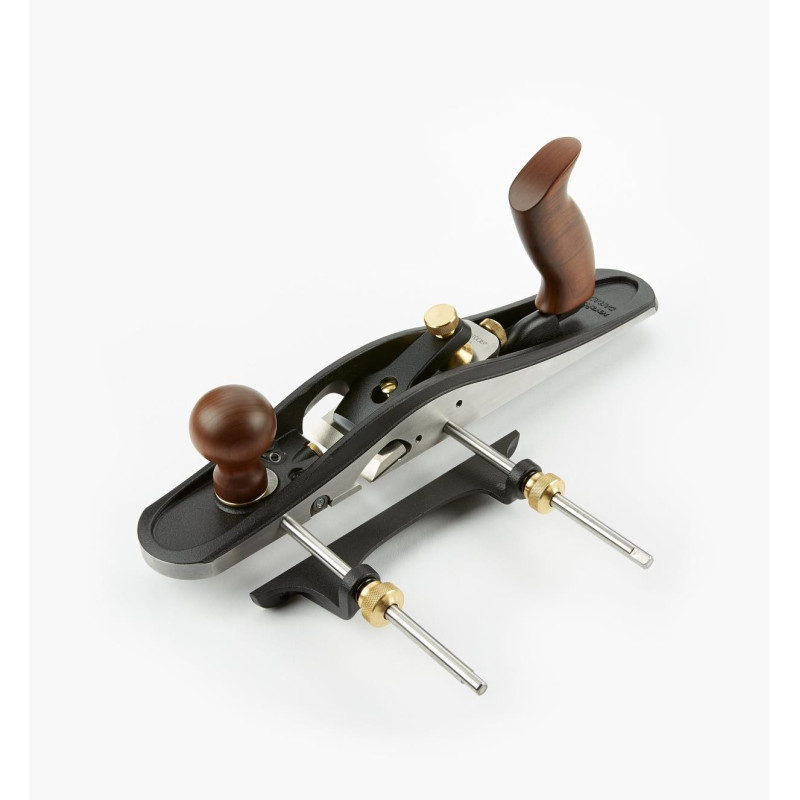
For very large rebates and raised panels there is the Veritas jack rabbet plane, 384 mm long and 2.7 kg.
Which plane should I choose?
All-round
Medium shoulder plane, 40° cutting angle.
Medium shoulder plane
Large tenons
Large shoulder plane, 210 mm, 1.7 kg.
Large shoulder plane
Rebates
Skew rabbet, 30° skew, nicker.
Skew rabbet plane
Large rebates
Jack rabbet, 384 mm, no blade.
Jack rabbet plane
What is the difference between a shoulder plane and a rebate plane?
Can a shoulder plane cut rebates?
What is the nicker for?
See the full range: Shoulder Planes
Share this content