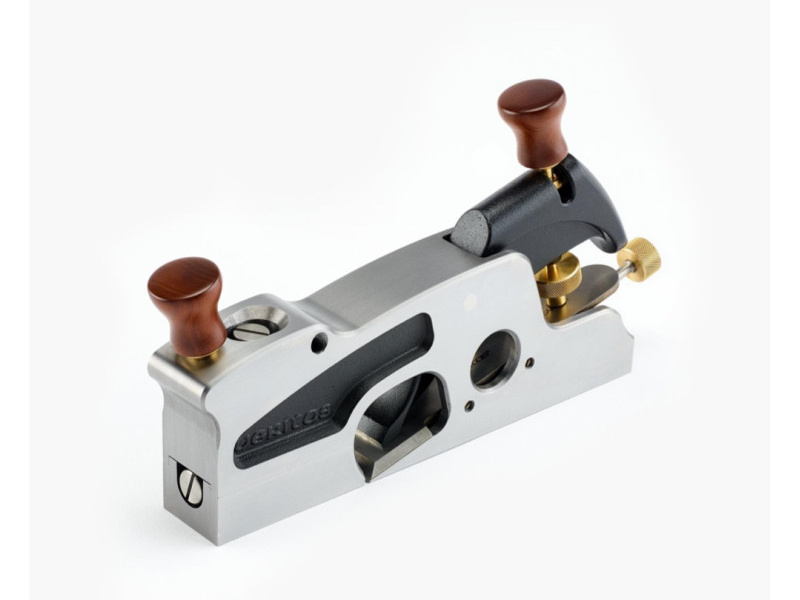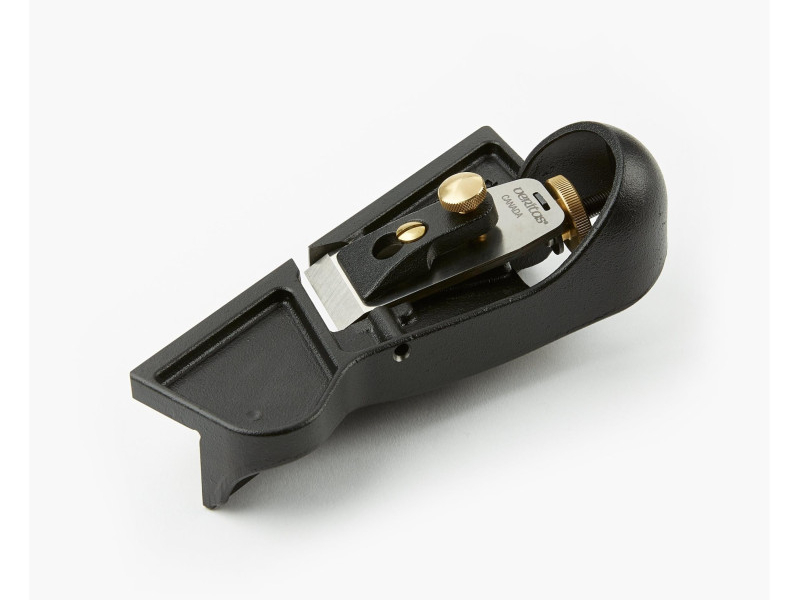


The Clifton 770 is a straightforward bullnose plane made to the same exacting standards as other Clifton planes. It lets you plane close to an abutting section without tear-out and is often used for cutting stopped rebate shoulders.
The Clifton 770 is a straightforward bullnose plane made to the same exacting standards as other Clifton planes. It lets you plane close to an abutting section without tear-out and is often used for cutting stopped rebate shoulders.
The body is machined from quality grey iron castings, precision ground on sole and sides, and the lever arm is also grey iron. The cutter seats on a machined pad and is finely adjusted by screw. The finish is bright ground and all edges are rounded for comfort. The cutter is high-quality oil-hardened tool steel, 59-61 Rockwell C, ground to 25° primary and 30° secondary bevel.
Facts:
Cutter width 1 1/8" (29 mm)
Length 4" (100 mm)
Weight approx. 0.65 kg
Made in Sheffield
Data sheet
Specific References
Which plane to start with depends on what you will do, but for most people a smoothing plane (No. 4) or a jack plane (No. 5) is a good first choice. The smoothing plane gives smooth surfaces, and the jack plane is a versatile plane for both rough work and truing edges.
Low-angle jack planes such as the Lie-Nielsen No. 62 and the Veritas low-angle jack are also popular all-round planes. A block plane is a good addition for end grain and chamfers. The guide explains how the hand plane is built and which types exist.
A shoulder plane and a rebate plane both have a blade that reaches the edges, but they are used for different tasks. The shoulder plane is narrow and precise and is used to trim tenon shoulders and adjust joints, often on end grain. The rebate plane often has a fence and depth stop and is used to cut rebates along an edge.
The guide explains when to choose which.
Planes of cast iron and steel rust easily, especially in unheated workshops and from moisture on your hands. Wipe the plane after use and protect bare surfaces with a thin layer of wax or oil that will not mark the wood.
Store your planes dry, ideally in a plane sock or box. If rust has already formed, the guide shows how to clean and protect them.
The Clifton 770 is a straightforward bullnose plane made to the same exacting standards as other Clifton planes. It lets you plane close to an abutting section without tear-out and is often used for cutting stopped rebate shoulders.