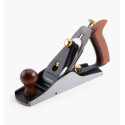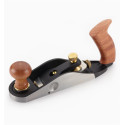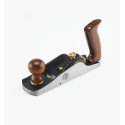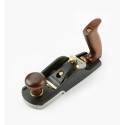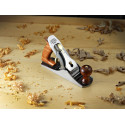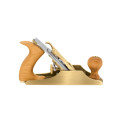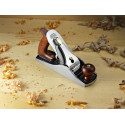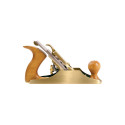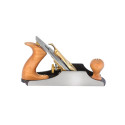
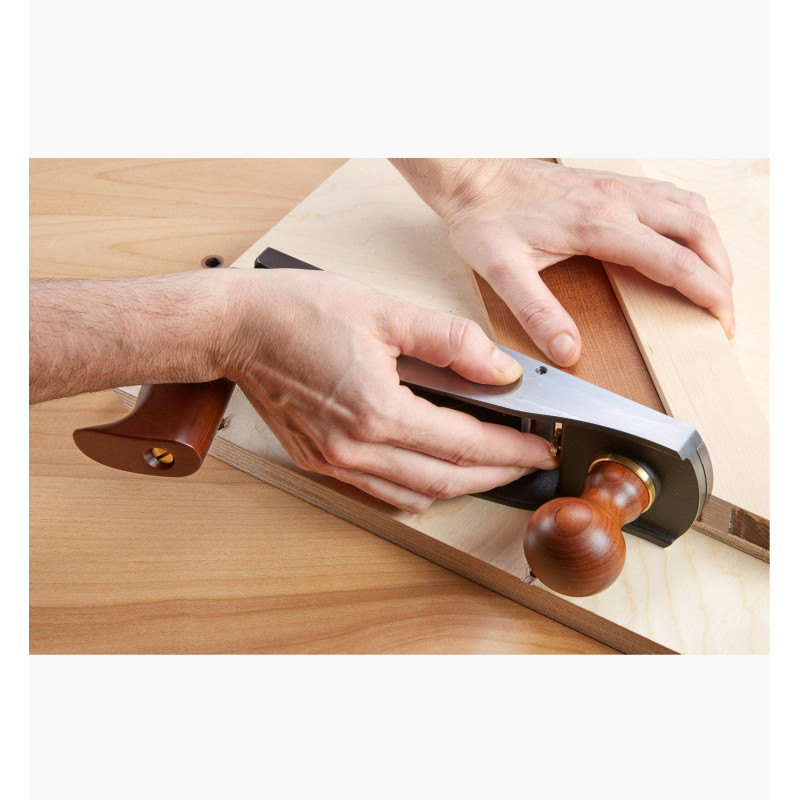
A smoothing plane has a short sole, 8–10", and is used for the final pass. Set up correctly, it leaves a polished surface that needs no sanding, even in wood where the grain changes direction.
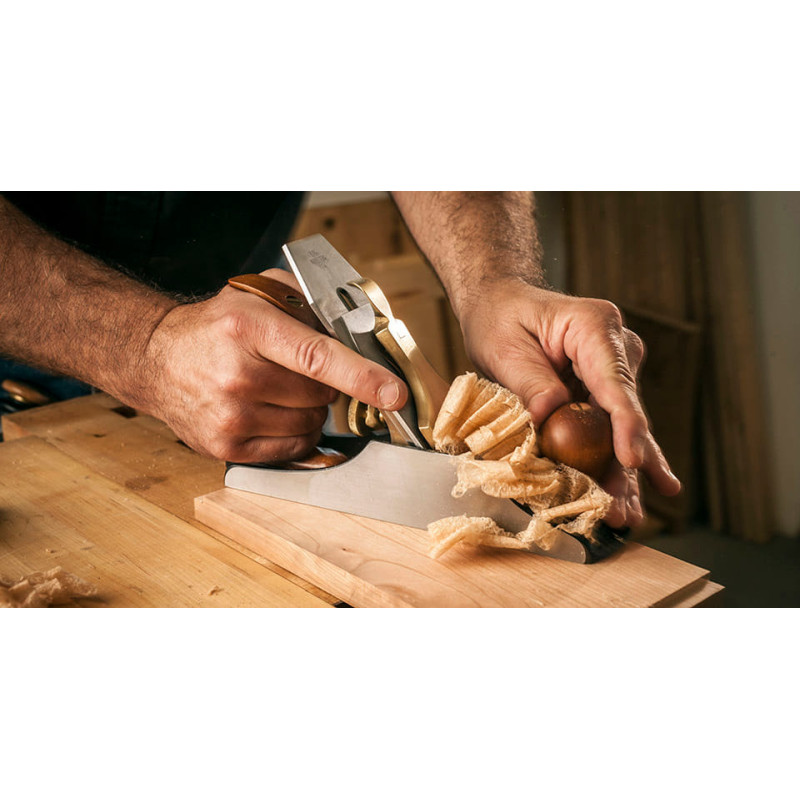
Setting up a smoothing plane
The blade should be very sharp, with the corners slightly rounded so they don't leave tracks in the surface. The chipbreaker is set close to the edge and the mouth kept as tight as possible.
Set the blade so the plane takes really thin shavings. The thinner the shaving, the lower the risk of tear-out.
Bench plane or low-angle plane?
A traditional smoother is a bench plane with the blade bevel down and a chipbreaker on top. A low-angle smoother has the blade bevel up, much like a block plane in a smoother's size, and has no chipbreaker.
Choosing the cutting angle
On a low-angle plane the bevel of the blade sets the cutting angle. Fitting a blade with a steeper bevel gives a higher cutting angle, which reduces tear-out in difficult grain. A lower bevel makes the plane cut more easily in soft wood and end grain.
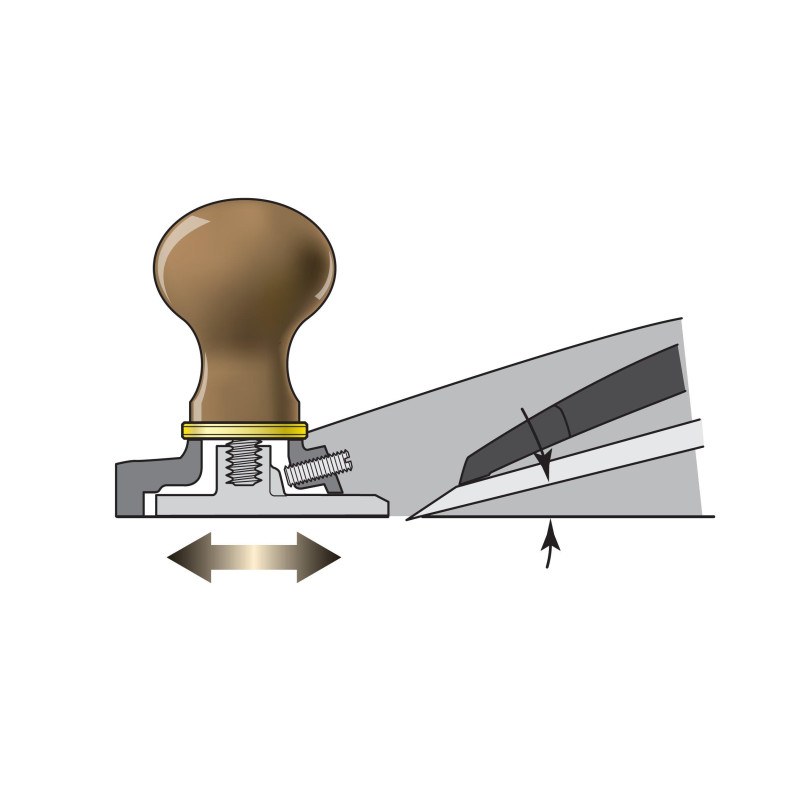
The adjustable mouth lets you quickly close it up for fine work or open it for heavier shavings.
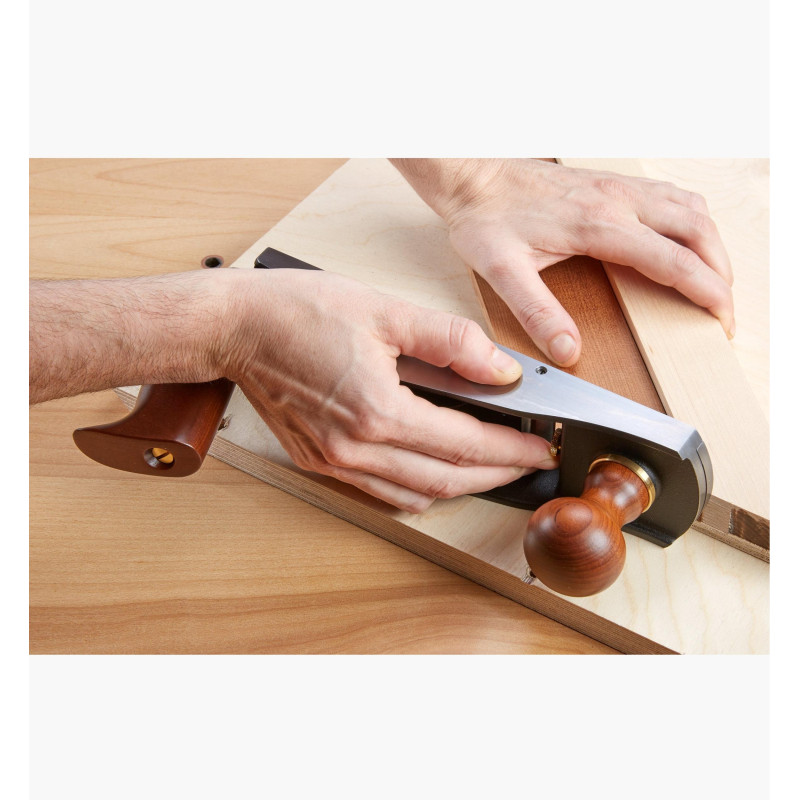

A little history
Until the late 19th century most smoothers were wooden. After that came planes in cast iron, ductile iron and sometimes bronze. English infill planes are regarded by many as the height of quality.
Which smoothing plane should I choose?
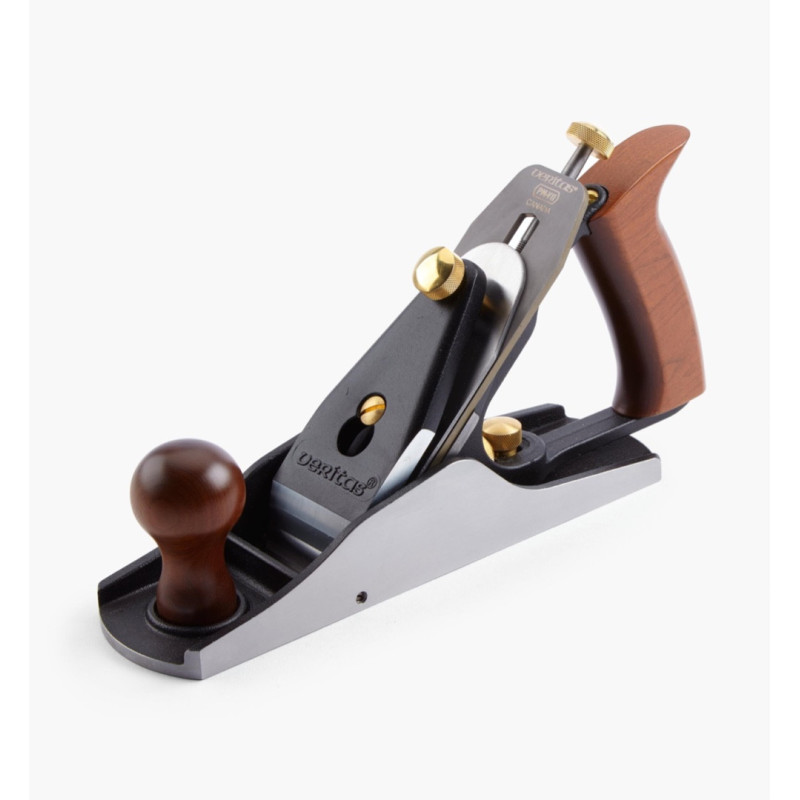
Veritas No. 4
A modern bench plane with many refinements.
Veritas No. 4 Smoother
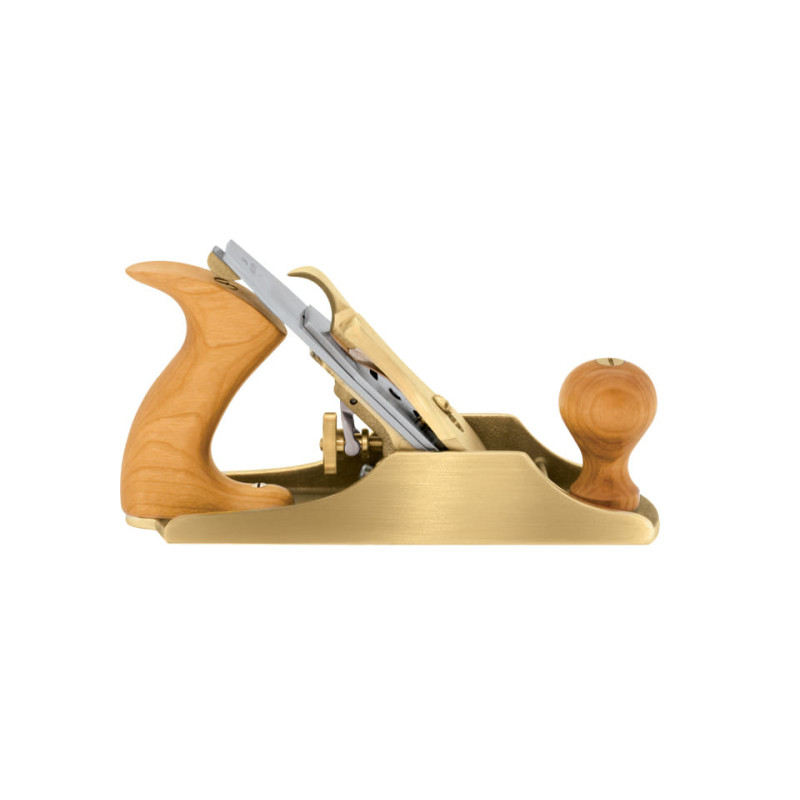
Lie-Nielsen No. 4
Classic pattern, heavy bronze body.
Lie-Nielsen No. 4, Bronze
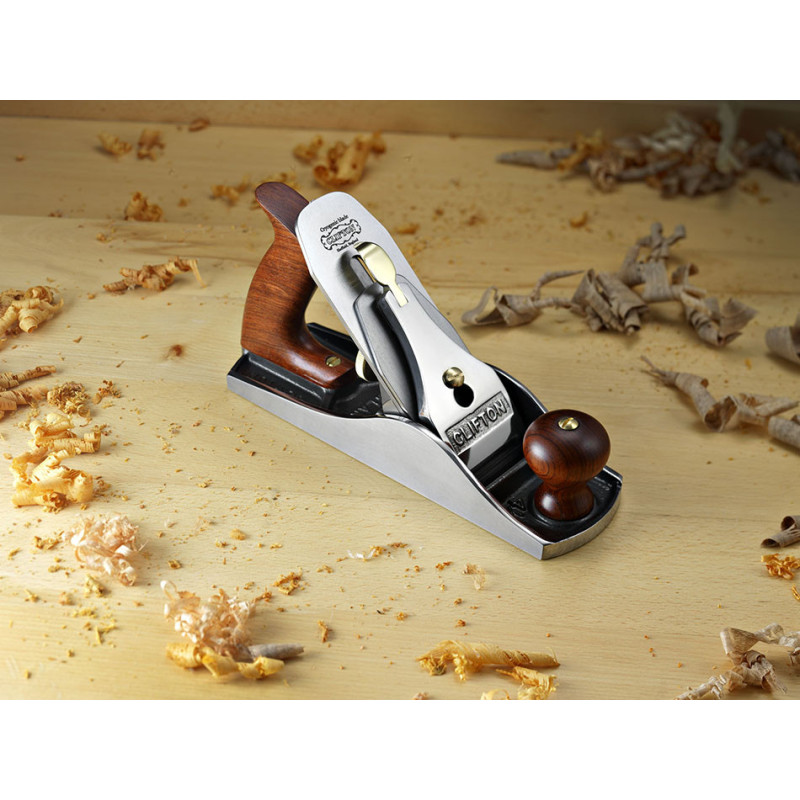
Clifton No. 4
A traditional English smoother.
Clifton No. 4
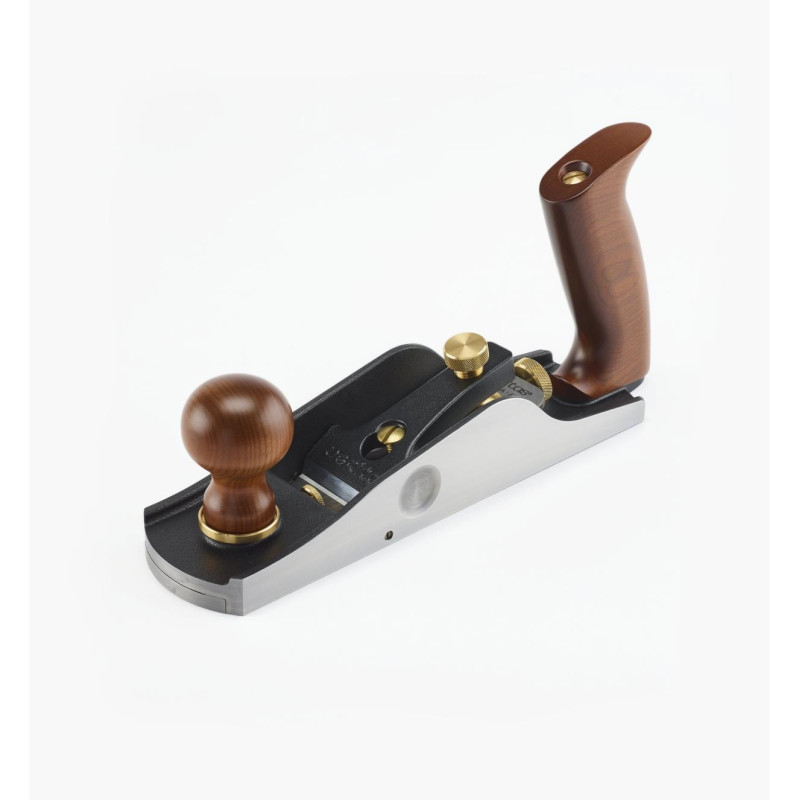
Low-angle
Change blades to change the cutting angle.
Veritas Low-Angle Smoother
No. 4 or No. 4 1/2?
Do I need to sand after the smoothing plane?
What should I do if the wood tears out?
See the full range: Smoothing Planes
Share this content