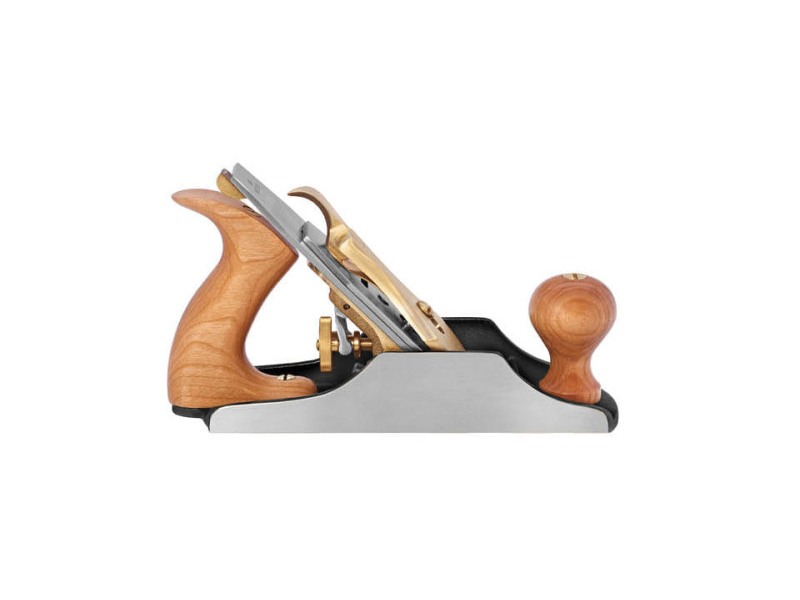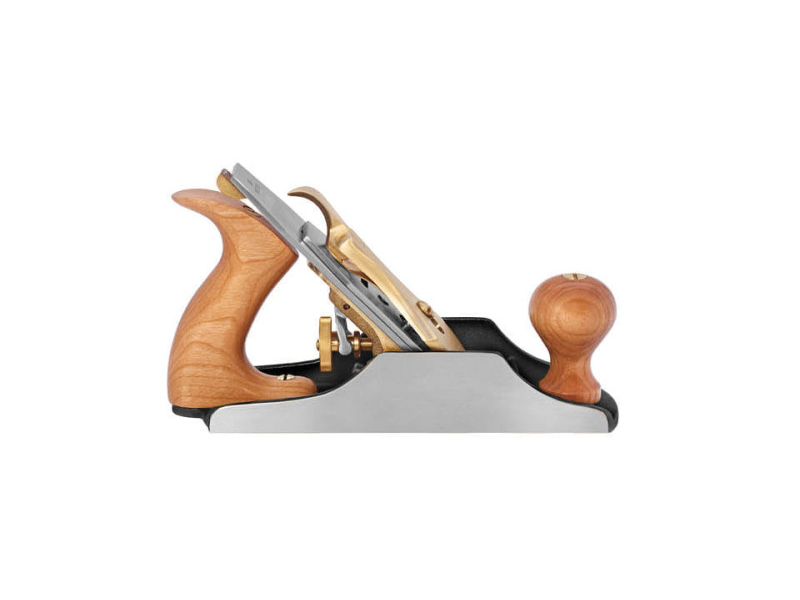


The Lie-Nielsen Low Angle Smoothing Plane is based on the rare Stanley 164, and is essentially a shorter version of the Low Angle Jack Plane, with an adjustable mouth and a massive 2" (5.08 cm) wide, 3/16" (4.7 mm) thick blade, set at 12°.
The Lie-Nielsen Low Angle Smoothing Plane is based on the rare Stanley 164, and is essentially a shorter version of the Low Angle Jack Plane, with an adjustable mouth and a massive 2" (5.08 cm) wide, 3/16" (4.7 mm) thick blade, set at 12°. However, this tool is only 9 1/2" (24.1 cm) long and weighs 3 3/4 lbs.
It is called a smoothing plane because of its size, the same as the Lie-Nielsen No. 4 smoother. But like the Jack, it excels at both rough and finish work, and can be converted from one mode to another very quickly. The unique overhead Bailey-type blade adjuster provides smooth depth adjustment at your fingertips.
Toothed blades for block planes and bench planes have small chisel-like teeth .030" (.762 mm) wide, and spaced .030" apart. They are used for heavy stock removal in difficult grain. Follow with a fine-set smoothing plane.
The planes work the same way and have the same blade, frog and precision, so the difference is the material of the body:
Bronze – heavier, which gives a calm, steady stroke, and it does not rust. The surface develops an attractive patina over time.
Cast iron – a little lighter and less expensive. The surface needs protecting against rust with wax, for example.
A No. 4 smoothing plane in bronze weighs 2 kg, for example, while the same plane in cast iron weighs 1.8 kg. Choose bronze if you want extra mass and no rust, and cast iron if you want a lighter plane at a lower price.
Which plane to start with depends on what you will do, but for most people a smoothing plane (No. 4) or a jack plane (No. 5) is a good first choice. The smoothing plane gives smooth surfaces, and the jack plane is a versatile plane for both rough work and truing edges.
A block plane is a good addition for end grain and chamfers. The guide explains how the hand plane is built and which types exist.
Planes of cast iron and steel rust easily, especially in unheated workshops and from moisture on your hands. Wipe the plane after use and protect bare surfaces with a thin layer of wax or oil that will not mark the wood.
Store your planes dry, ideally in a plane sock or box. If rust has already formed, the guide shows how to clean and protect them.
Most products are restocked on an ongoing basis, but delivery times from the manufacturer vary. When an item is out of stock, the button Notify me when available appears on the product page.
Click the button and enter your email address, and we will email you as soon as the item is back in stock. If you want to know when the next delivery is expected, you are welcome to contact us.
You might also like
The Lie-Nielsen Low Angle Smoothing Plane is based on the rare Stanley 164, and is essentially a shorter version of the Low Angle Jack Plane, with an adjustable mouth and a massive 2" (5.08 cm) wide, 3/16" (4.7 mm) thick blade, set at 12°.