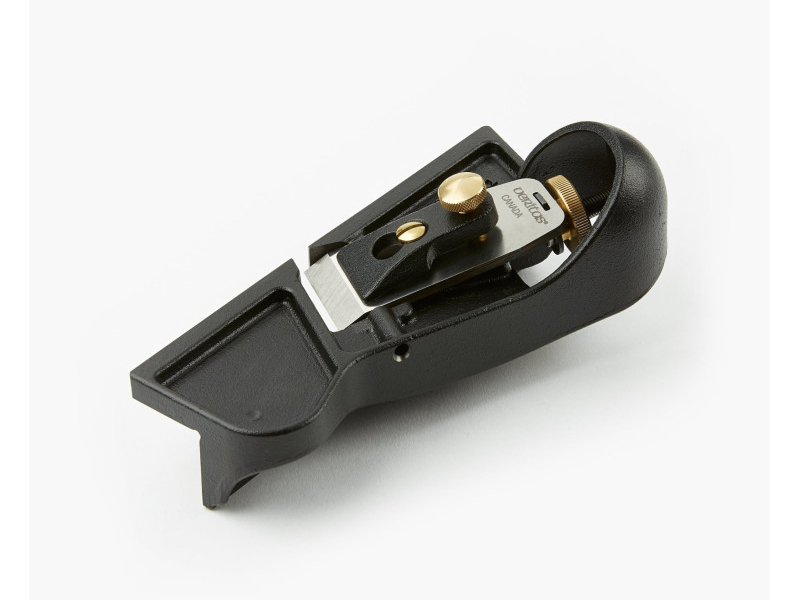
- Only Plane/No blade


A new concept in plane design, Veritas custom bench planes can be customized to fit the work you do and the way you do it. You choose the frog angle, the blade material, and even the size and style of the knob and tote, allowing a level of personalization previously limited to handmade planes.
A new concept in plane design, Veritas custom bench planes can be customized to fit the work you do and the way you do it. You choose the frog angle, the blade material, and even the size and style of the knob and tote, allowing a level of personalization previously limited to handmade planes. Each part of the plane is machined by Veritas for accuracy and fit, ensuring that the plane functions as a unified whole no matter which parts you choose.
You buy the plane body only and then choose the tote, knob, frog and blade separately to make a complete plane.
The body is made from fully stress-relieved ductile cast iron. The sole is machined flat and square to the sides and has extra-large side wings for stable shooting. The Norris-style combined feed and lateral adjustment mechanism allows easy and accurate blade setting, and two set screws register the blade in the throat. The movable toe plate allows quick mouth adjustments: loosening the front knob lets you close the mouth to a narrow slit for fine shavings and minimum tear-out or open it for heavier cuts. A stop screw in the throat retains mouth settings and prevents accidental contact with the blade.
The cap iron registers on and attaches to a low-profile blade carrier attached to the blade, which allows you to easily restore the cap iron to the same position after removal for blade sharpening. Two tapped holes in either side allow the mounting of an optional fence, available separately. Patented. Made in Canada.
The #5 1/2 is 15" long and 3" wide, weighs 6 lb 9 oz and uses a 2-3/8" wide blade. It is a large jack plane whose wider blade removes more wood with each pass, making rough flattening and dimensioning more efficient. Its weight provides more inertia when planing, and it can also serve as a jointer for smaller work, less tiring to use than the #7.

Specific References
Which plane to start with depends on what you will do, but for most people a smoothing plane (No. 4) or a jack plane (No. 5) is a good first choice. The smoothing plane gives smooth surfaces, and the jack plane is a versatile plane for both rough work and truing edges.
A block plane is a good addition for end grain and chamfers. The guide explains how the hand plane is built and which types exist.
Planes of cast iron and steel rust easily, especially in unheated workshops and from moisture on your hands. Wipe the plane after use and protect bare surfaces with a thin layer of wax or oil that will not mark the wood.
Store your planes dry, ideally in a plane sock or box. If rust has already formed, the guide shows how to clean and protect them.
Most products are restocked on an ongoing basis, but delivery times from the manufacturer vary. When an item is out of stock, the button Notify me when available appears on the product page.
Click the button and enter your email address, and we will email you as soon as the item is back in stock. If you want to know when the next delivery is expected, you are welcome to contact us.
You might also like
A new concept in plane design, Veritas custom bench planes can be customized to fit the work you do and the way you do it. You choose the frog angle, the blade material, and even the size and style of the knob and tote, allowing a level of personalization previously limited to handmade planes.