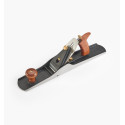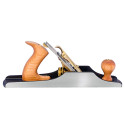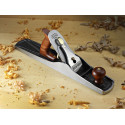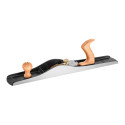


How jack and jointer planes are used
A long-soled plane rides on the high spots of an uneven surface. It mainly removes the peaks while the hollows under the sole are left untouched until the surface is flat.
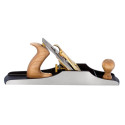
A short jack or fore plane (about 14") with a coarse setting and wider mouth is usually the first step when flattening a board. It can be worked diagonally to level the surface before planing with the grain. If a lot of material must come off, or the board is badly twisted, start with a scrub plane.
A longer jointer plane (18" or more) with a fine setting and tight mouth follows, and the smoothing plane finishes the surface. This three-plane sequence goes back at least to Joseph Moxon's Mechanick Exercises from the 17th century. Long planes are also ideal for edges and other long workpieces.
See our range: Jack and Jointer Planes
Share this content