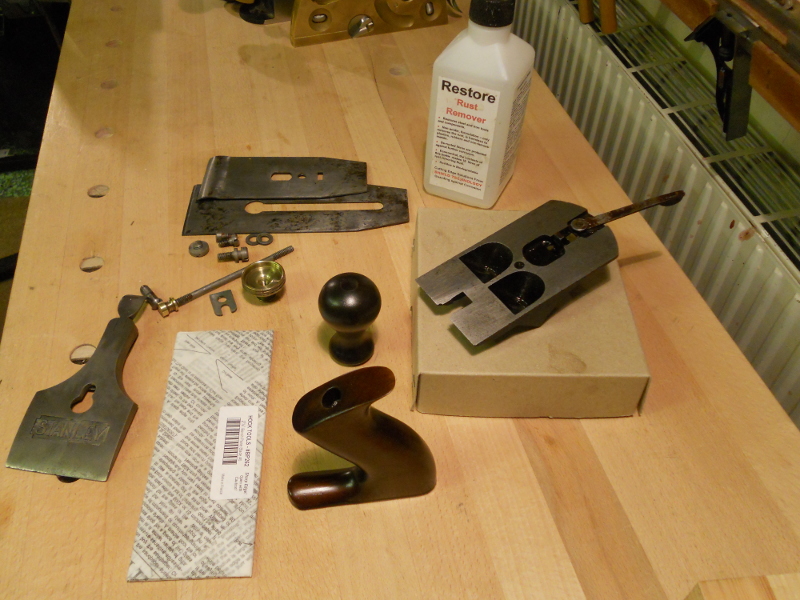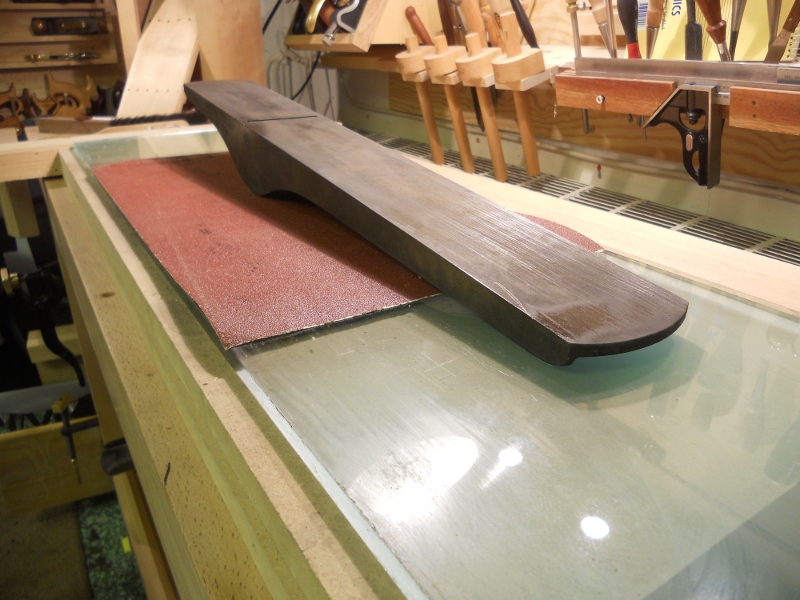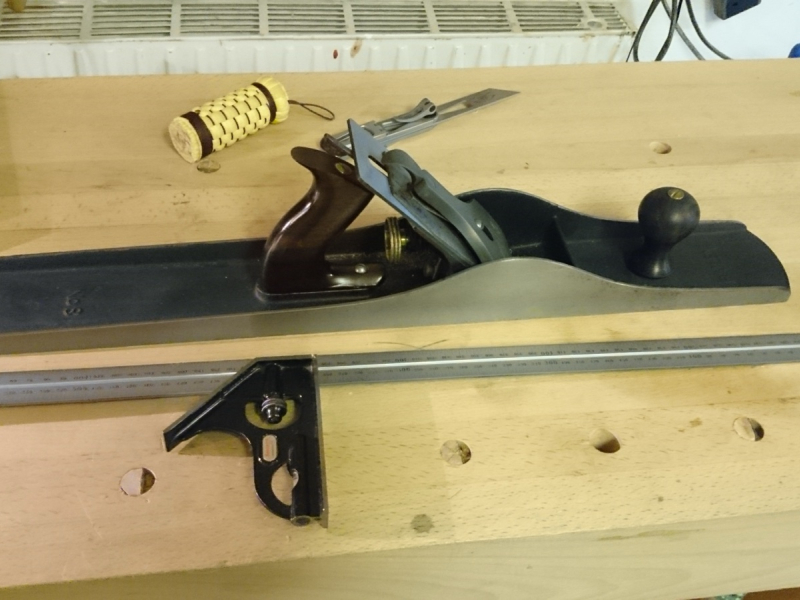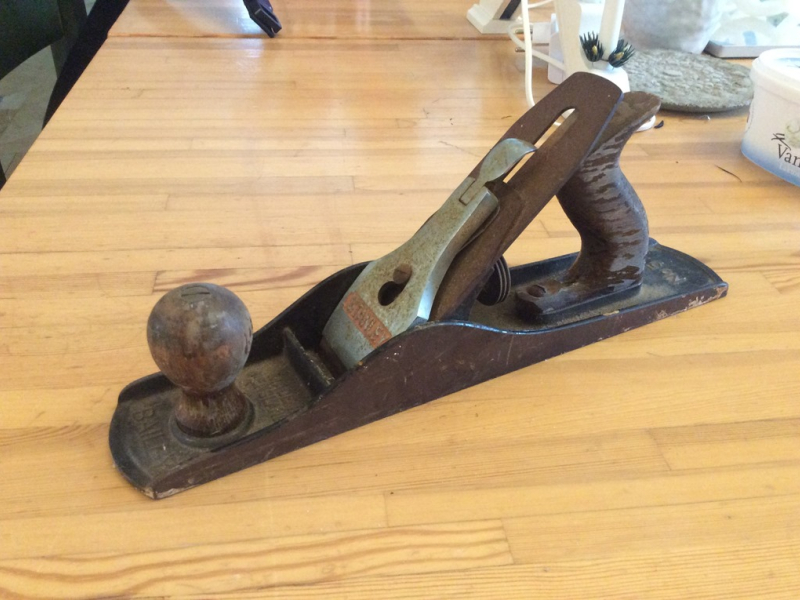
The other week I had a sudden urge to visit the local flea market. It had been a long time and I wasn't really looking for anything in particular; I mostly wanted to see if there was anything fun. A cheap saw to practise saw filing on would have been a nice find, for example. Imagine my surprise when, at the tool man's stall in the corner, the one with piles of rusty junk, I found a long, heavy and rusty plane. Well, well, a Stanley #8! I thought it could be an interesting restoration project. After a short bit of haggling I took my new friend home. Usually I restore planes only for function and not for looks, but this one I think I will try to make nice-looking as well. We'll see how it goes… Then I'll see whether it replaces my current Bedrock #8 or whether I sell it on at a handsome profit.
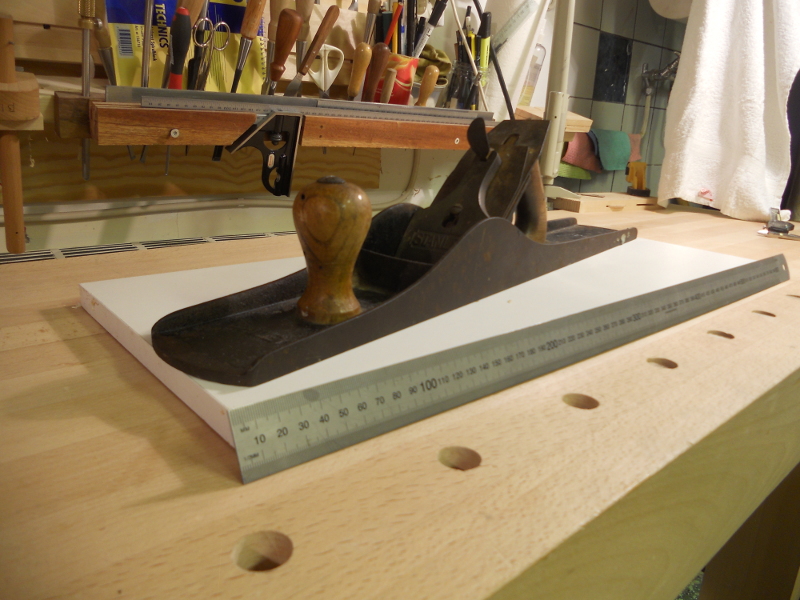
These days I am quite choosy when I buy rusty planes for restoration. A Stanley plane has to meet a number of criteria.
- It is intact. It must not have any cracks or other damage in the casting. The handles may be broken, because they can be replaced.
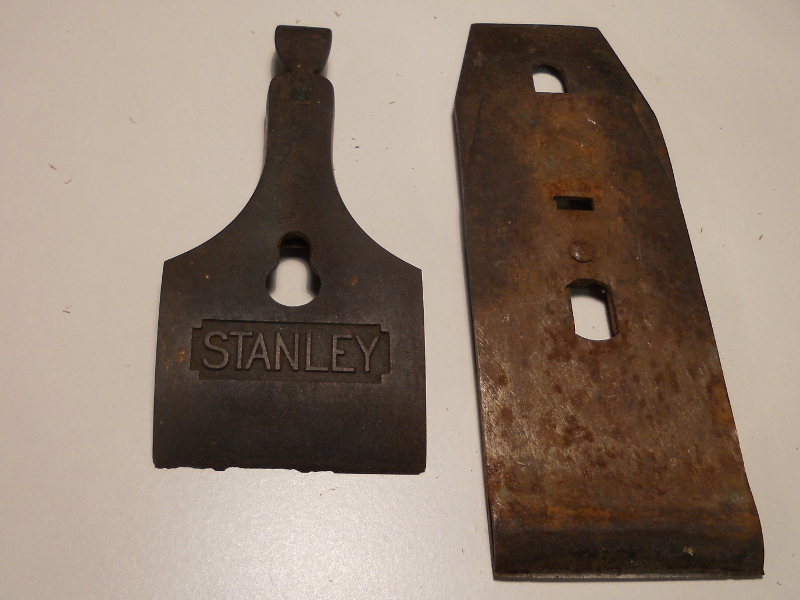
- It is old. The best planes were made up to the Second World War and the very best around the First. You recognise these first by the keyhole-shaped hole in the lever cap. Later the shape was changed to the current kidney shape. Another sign is that the older frogs have much more metal for the iron to bear against. A third sign is the shape of the front handle, the “knob”. The oldest planes, up to about the mid-1920s, have a low knob, the later ones a high one. A fourth sign is the size of the depth adjustment knob. The older planes have a small knob, the newer ones a large one. On the very oldest it is also right-hand threaded, which means the blade goes out when you think it is going in. Confusing if you have a mixed fleet, believe me.
- It is made in the USA. Stanley's foundries in England, Canada and Australia simply weren't as good.
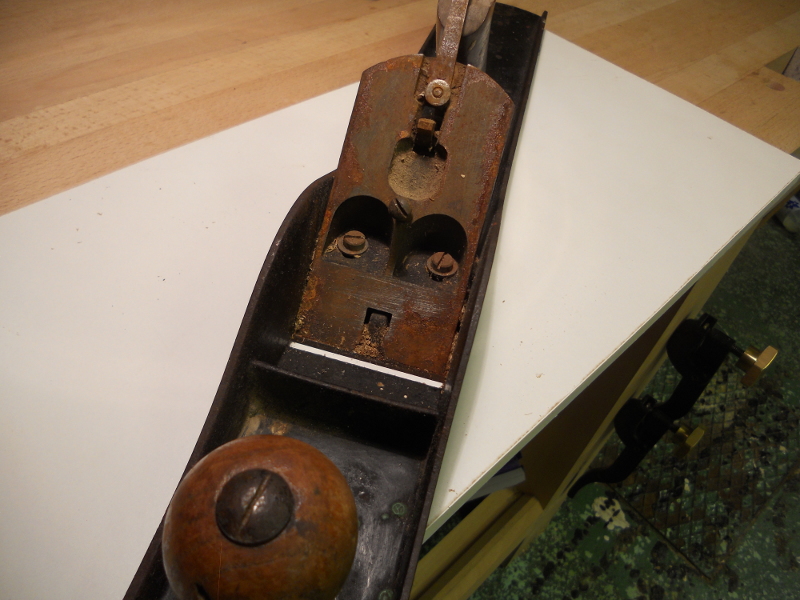
- Not too much pitting on the sole. Above all, not near the mouth.
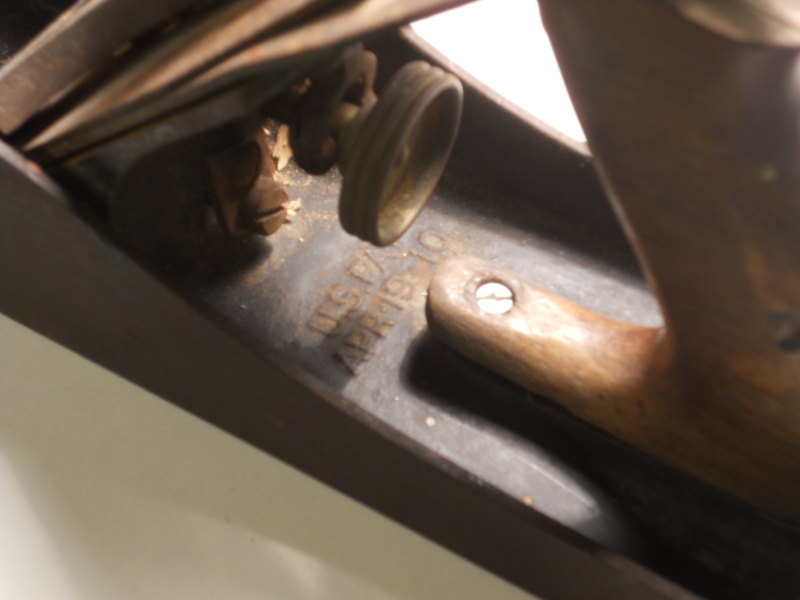
With the help of Hyperkitten's flow chart I worked out that this is a Type 13, i.e. made 1925–1928. The dating is done through a series of questions, in this case two:
– Number of patent dates on the sole? One.
– Raised ring in the casting under the front knob? No.
So, Type 13. It then also has the sought-after Sweet Heart logo on the blade. That is a heart with the letters SW inside.
The plane is in fairly good condition, but there are a few things that need fixing:
– The front knob has been replaced with an ugly one, and it is fixed with a carriage bolt in a rethreaded hole. Will take a bit of metalwork to fix.
– The rear tote is damaged. I am replacing both handles with new ones.
– The front edge of the lever cap is badly damaged; I'll have to grind it back a bit.
– The wrong screw holds the front of the tote. Thankfully the threads seem intact.
– Rust everywhere. That is no problem but takes a while to remove.
To be continued… Read part 2: Rust, Rust and Dirt. The end result: Fully Restored Stanley No. 8.
Share this content