

Hardened teeth or resharpenable?
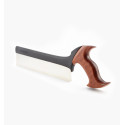
Most saws sold in builders' merchants have impulse-hardened teeth. They are too hard to file, so once they are dull the saw is finished. Hardened teeth can be recognised by their blue-black colour.
A resharpenable saw can be sharpened again and again and will last for generations. Older Swedish handsaws from makers such as Sandvik, Stridsberg & Björk and EIA are worth looking after for the same reason.
Crosscut and rip teeth
A crosscut saw has teeth shaped to sever the fibres across the grain, while a rip saw has chisel-like teeth for cutting along the grain. Tooth count is given in tpi (teeth per inch): fewer teeth cut faster but rougher, more teeth leave a finer surface. As a rough guide, 3.5–5 tpi suits rough cutting, 6–8 tpi general work, 9–11 tpi fine joinery and 12 tpi and up fine backsaws.
Sharpening a saw
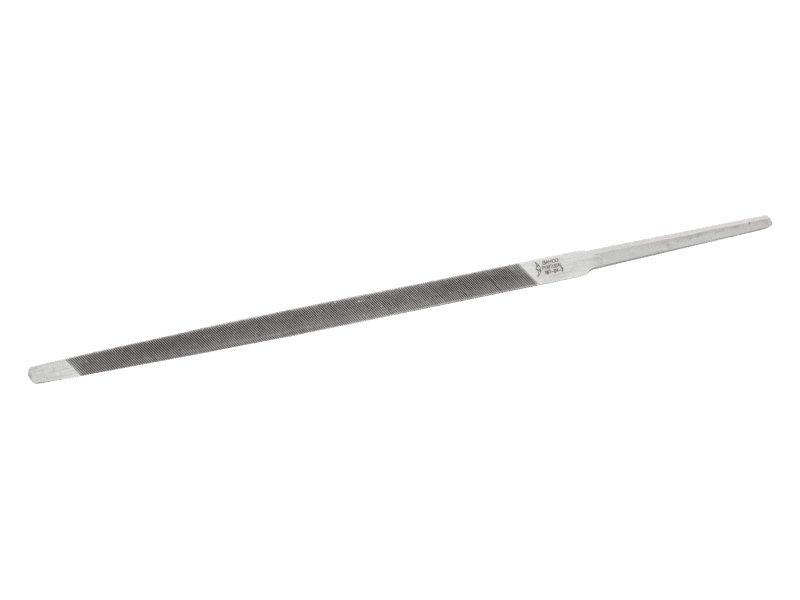
Sharpening is done in a few steps: jointing so all teeth are the same height, shaping the tooth profile, filing the bevels and finally setting, where alternate teeth are bent to each side so the saw does not bind in the kerf. Then make a test cut. If the saw drifts, run a fine stone along the teeth on the side it drifts towards. All you need is saw files, a saw vice and a saw set.
See our range: Handsaws
Share this content