Chip carving is decorative woodcarving in geometric patterns. The cuts are made with a very sharp knife or with dedicated chip carving knives, as wide, deep grooves with smooth sloping faces. The technique has a long tradition on boxes, mangle boards and spoons.
The basic cuts
The simplest patterns are triangles, where three cuts meet at a point and a small three-sided chip is lifted out, and nail cuts, made with the point of a stab knife.
The classic rosette has petals drawn with arcs dividing the circle into six. Chip carving can be very simple or highly elaborate.
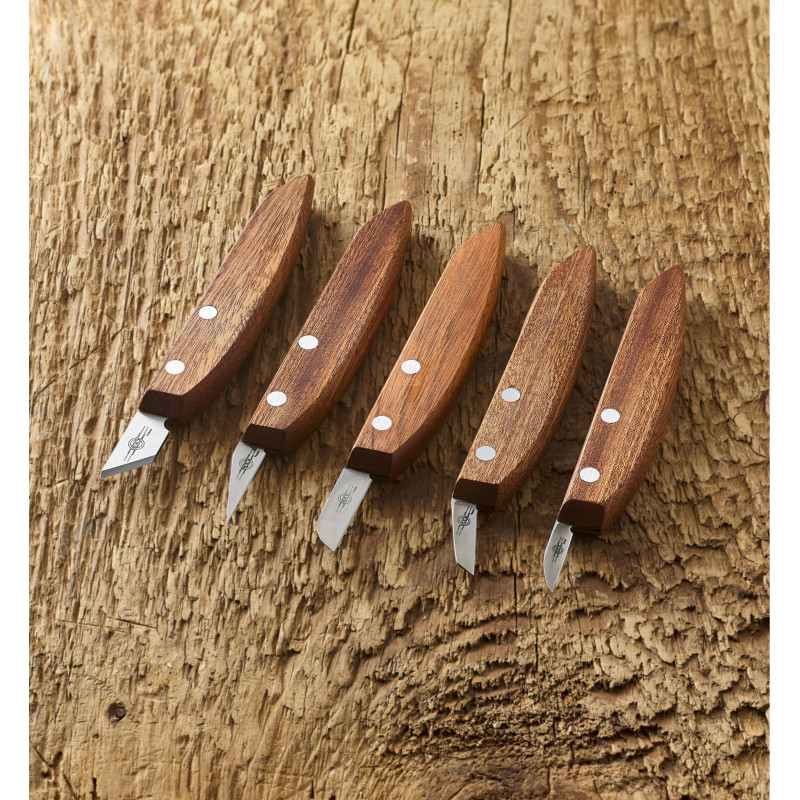
Knives for chip carving

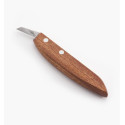
Chip carving knife
Cuts out small triangular chips and patterns in the surface.

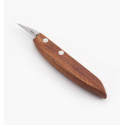
Stab knife
Stabs decorative cuts and patterns into the surface.

Detail knife
For fine carving and detail work.
Keep the knife sharp
Chip carving needs a very sharp edge, otherwise the cuts become rough and the wood breaks instead of being cut. Hock knives have blades of high-carbon steel hardened to 62 HRC, the same steel Hock uses in its plane blades. It is easy to hone and takes a very keen edge.
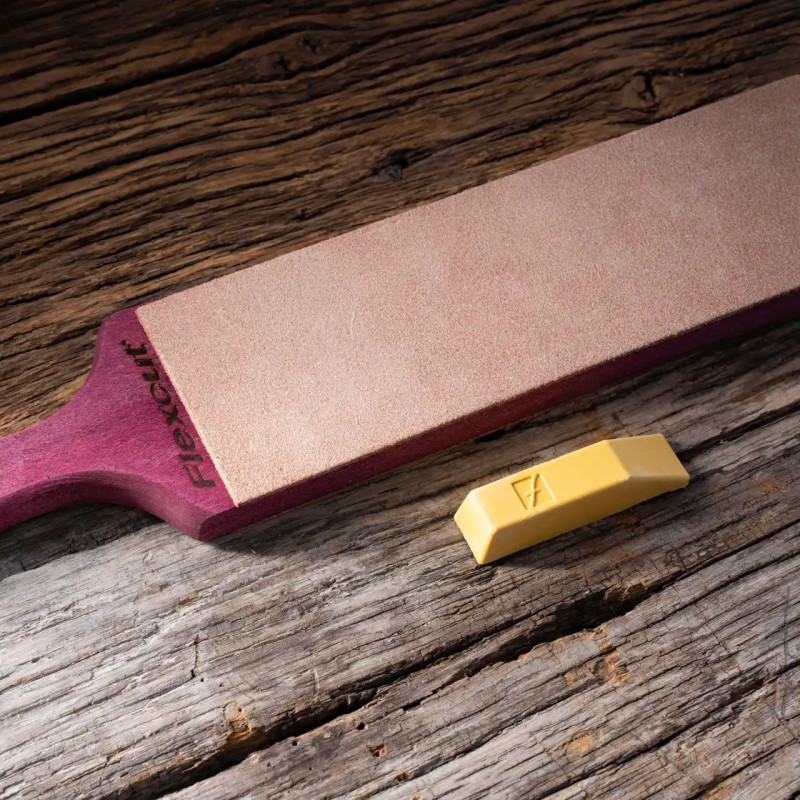
Strop the edge often on leather with honing compound. Read more in Sharpening Edge Tools.
Which knife should I choose?
Chip carving
25 mm blade.
Hock chip carver
Stab knife
32 mm blade.
Hock stab knife
Detail knife
32 mm blade.
Hock detail knife
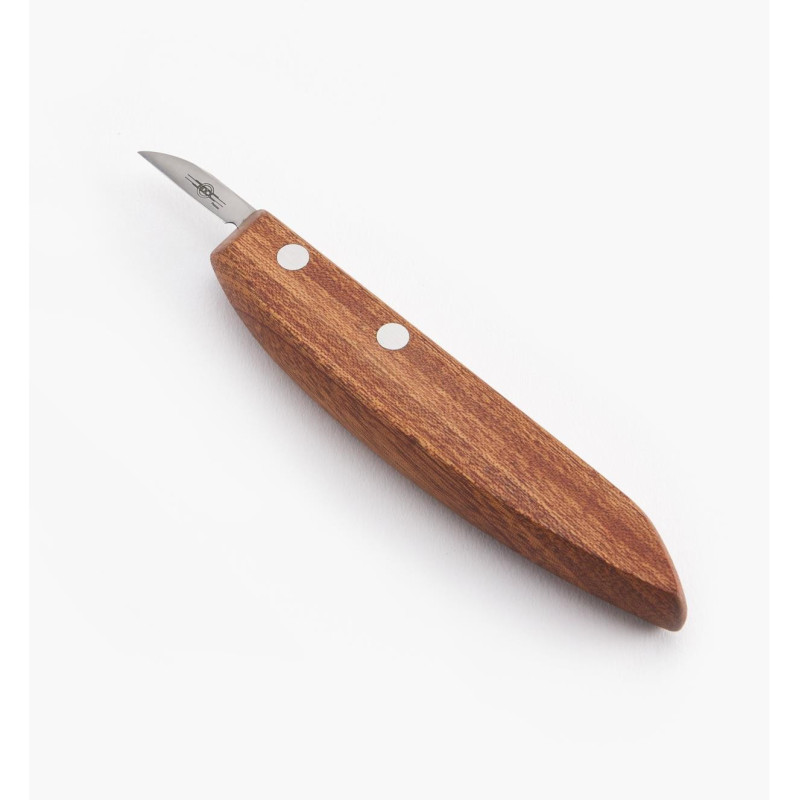
Carving knife
Straight 25 mm blade.
Hock carving knife
Which wood suits chip carving?
Do I need special knives?
Can I make my own handle?
See the full range: Hock Chip Carving Knives
Share this content