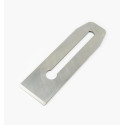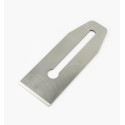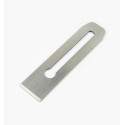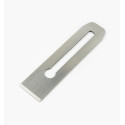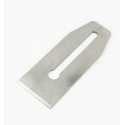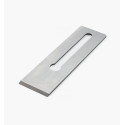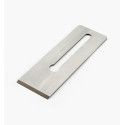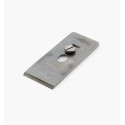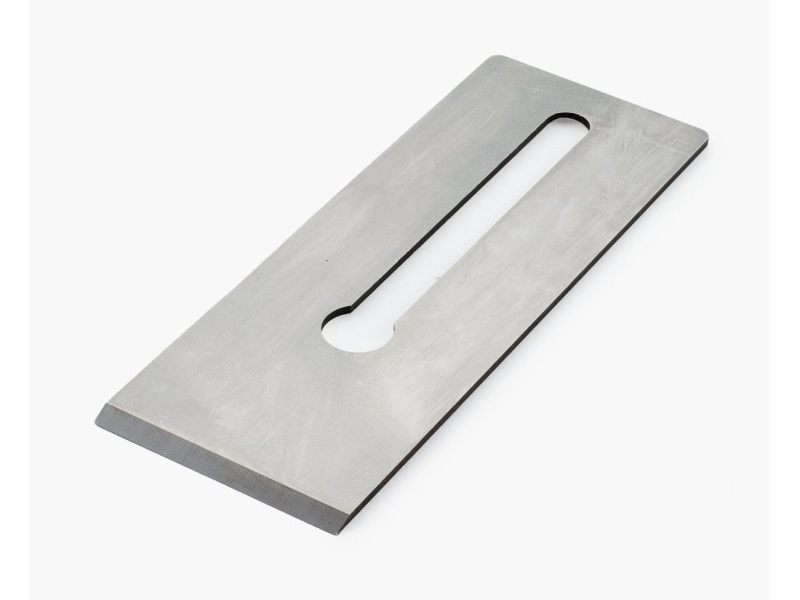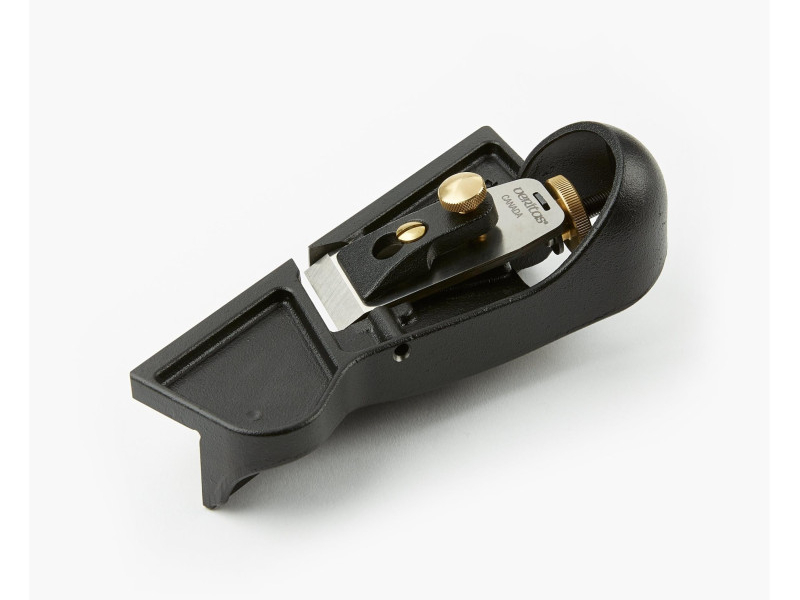
An old Stanley or Record plane can become an excellent plane with a new, thicker blade. The original blades are often thin and of mediocre steel. A thicker blade in good steel gives a steadier cut, holds an edge longer and is easier to sharpen. We stock replacement blades from both Veritas and Hock.
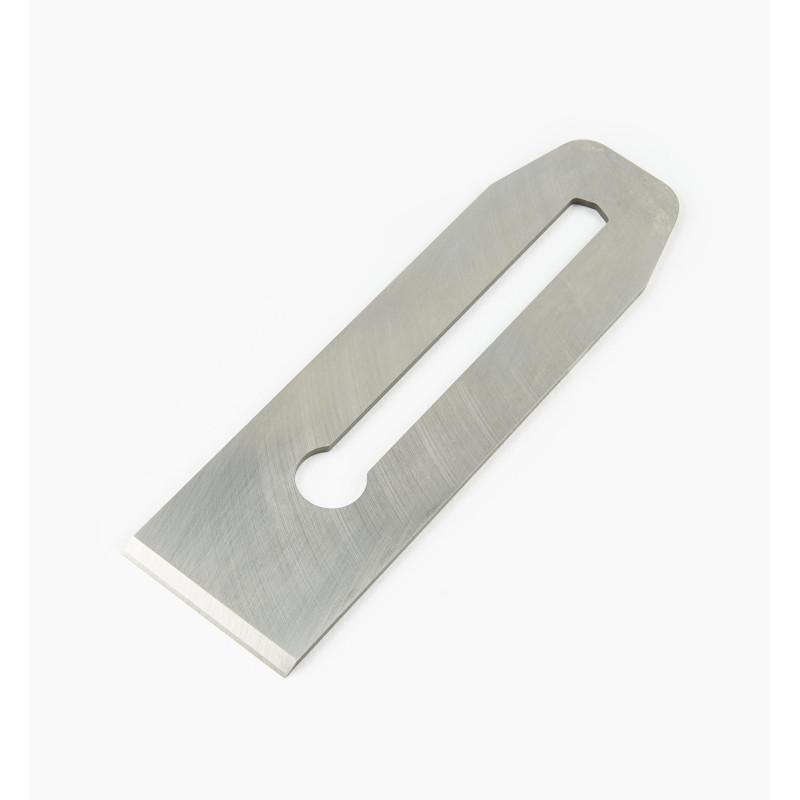
Bench planes
Replacement blades for bench planes are thicker than the original blades, which reduces vibration and gives a steadier cut. They are 178 mm (7") long and fit almost all makes of the corresponding plane size.
Veritas blades are made of PM-V11, 2.5 mm (0.100") thick, 25% thicker than the industry standard of 2 mm, with a 30° bevel. The face is ground flat.
Hock blades are 3/32" (2.4 mm) thick, in O1 or cryogenically treated A2.
Because metal planes have been made for more than a century, dimensions vary. Usually all that is needed is a simple adjustment of the frog. On older planes the tab on the lateral adjuster may need filing slightly to fit the slot in the blade, and sometimes the mouth needs opening a little.
A thicker chipbreaker
A thicker chipbreaker stabilises the edge and reduces vibration. Hock's chipbreaker is 3 mm thick, almost twice as thick as an ordinary original chipbreaker, and matches Hock blades of the same width.
Set the chipbreaker very close to the edge to best prevent tear-out.
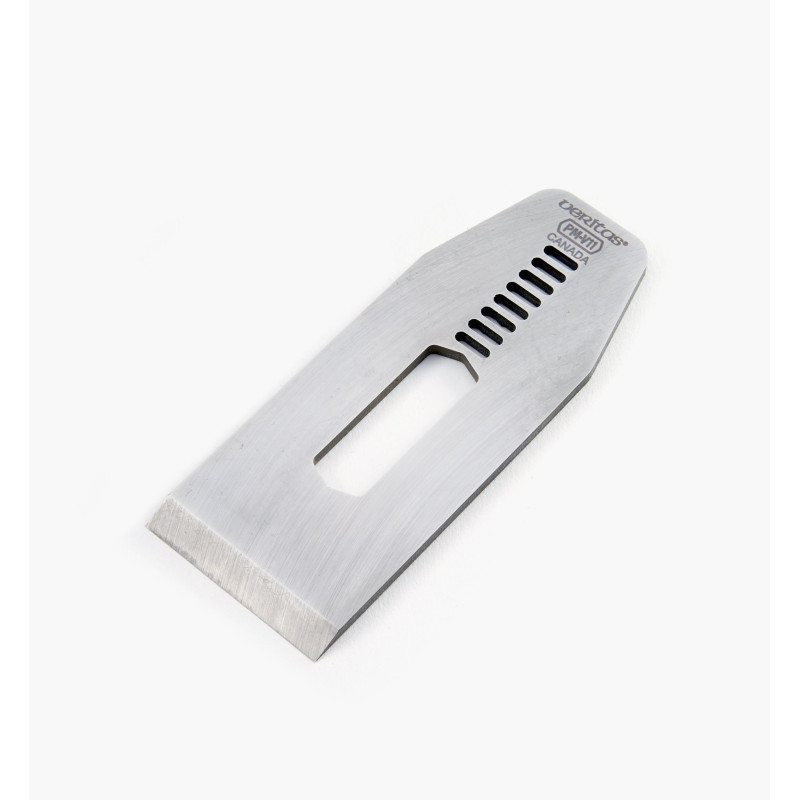
Block planes
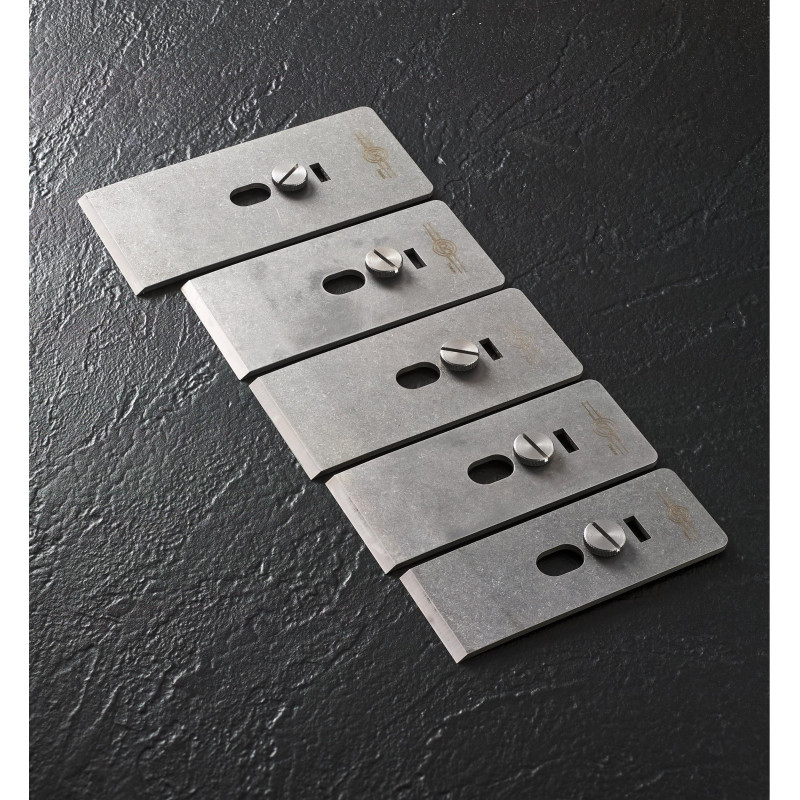
Block plane blades have slots for the depth adjuster. Measure the width to find the right one: either 1 3/8" (low-angle, 60 1/2 type) or 1 5/8" (standard, 9 1/2 type).
Then check the slots: British-made Stanley and Record planes with a lateral adjuster need 5/8" slots (three notches), while older American Stanley planes without a lateral adjuster need 7/16" slots (eight notches).
Veritas makes PM-V11 blades in all these versions, 3.2 mm (1/8") thick with a 25° bevel. Hock block plane blades are 3/32" thick, in O1 or A2.
Read more in Hock Block Plane Blades – Choosing the Right One.
Which steel?
O1 is a high-carbon steel that is easy to hone and takes a very sharp edge.
A2 holds an edge longer before you need to sharpen. Hock's A2 is cryogenically treated.
PM-V11, Veritas' own alloy, holds an edge the longest but costs the most.
Which blade do I need?
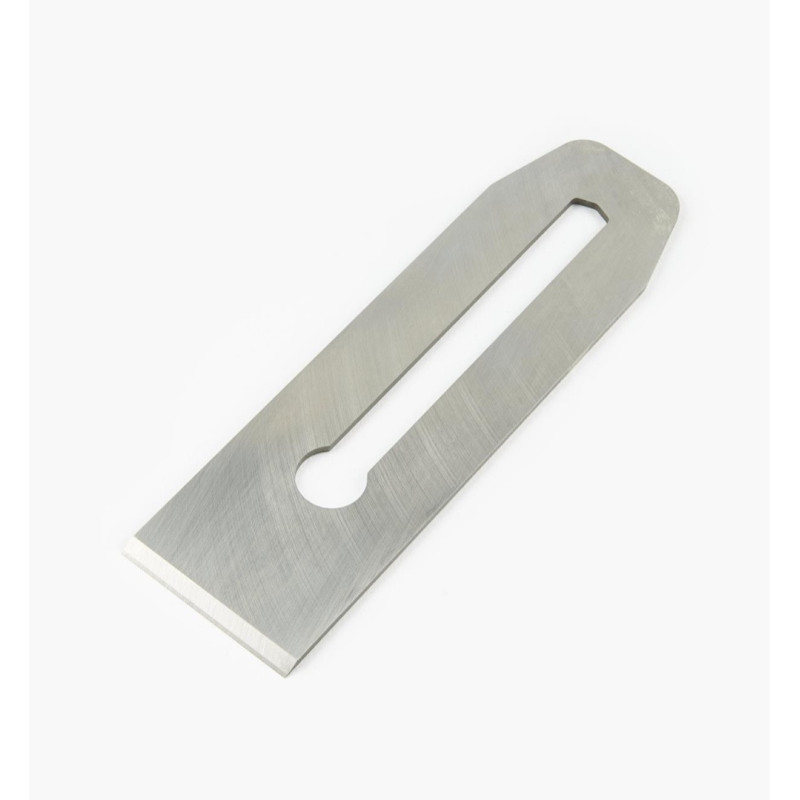
Veritas, No. 4 and 5
PM-V11, 2", also in 2 3/8" for No. 4 1/2, 6 and 7.
Veritas blade 2"
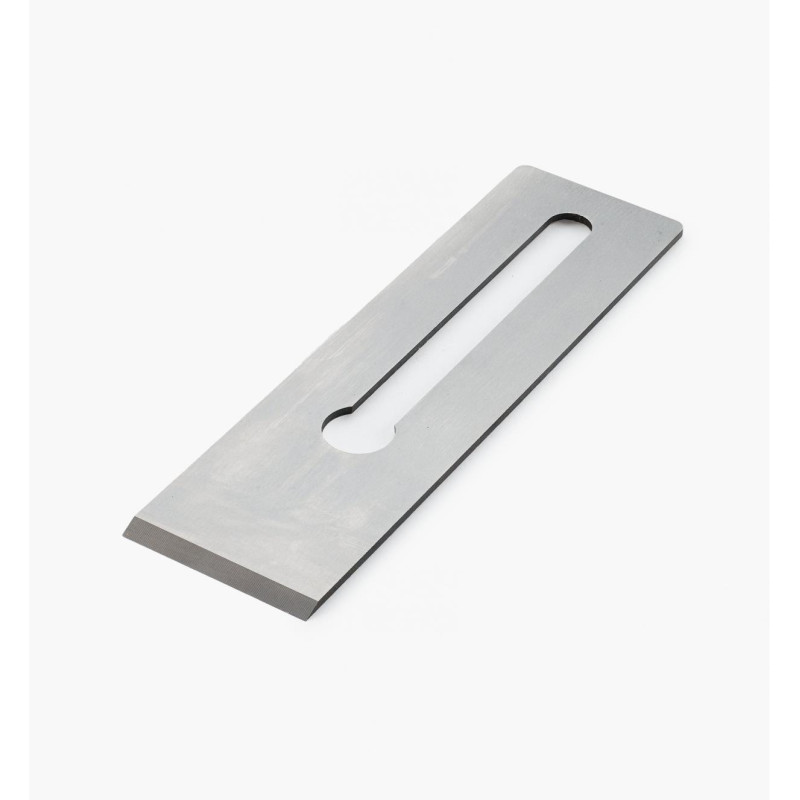
Hock, No. 4 and 5
O1 steel, 3/32" thick, also in A2.
Hock blade No. 4/5
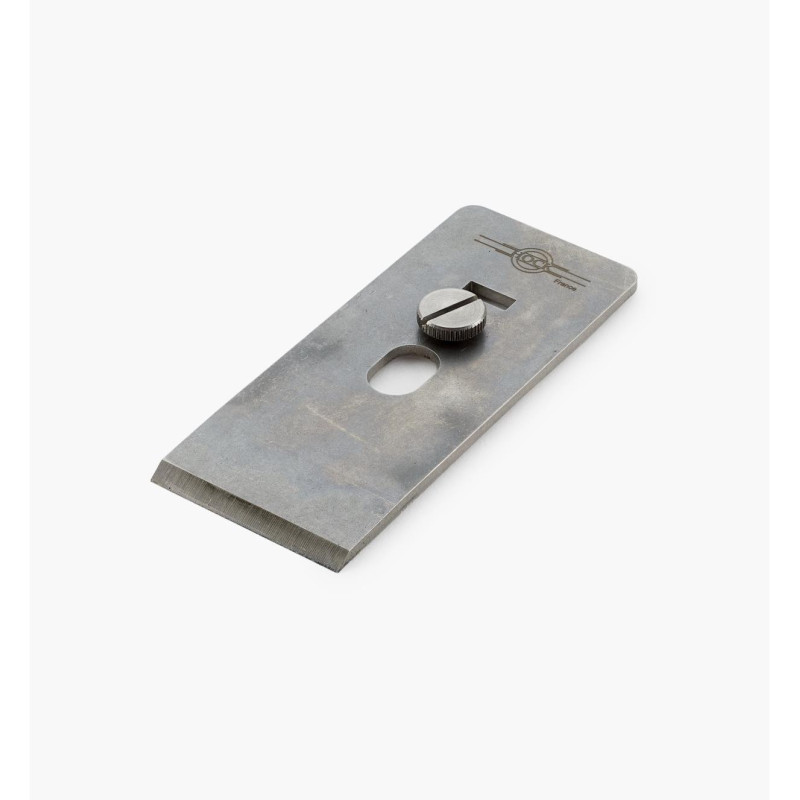
Chipbreaker
Hock, 3 mm thick, for No. 4 and 5.
Hock chipbreaker
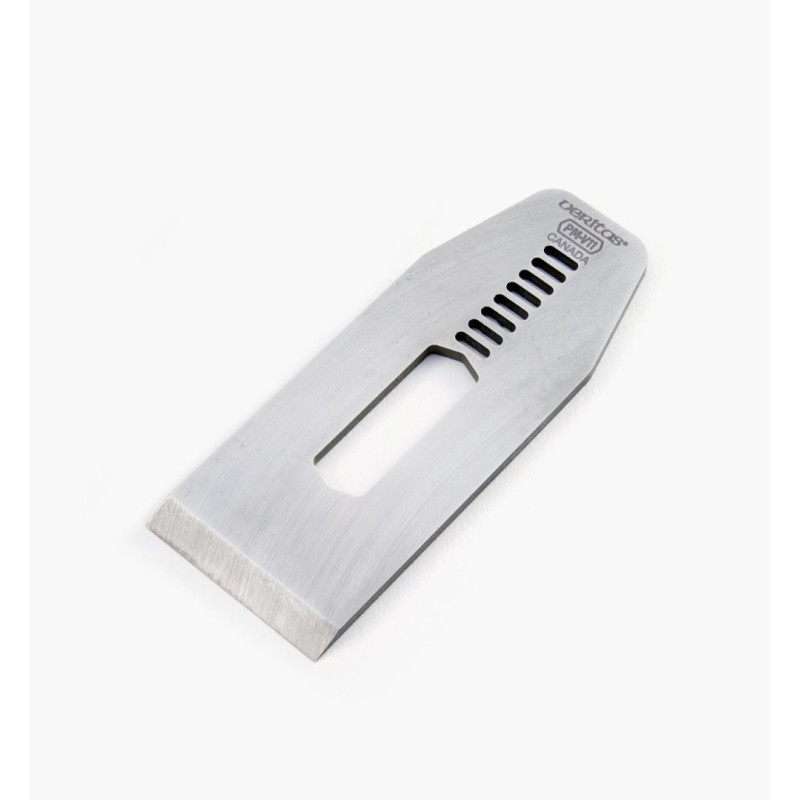
Stanley 9 1/2
Veritas PM-V11, 7/16" or 5/8" slots.
Veritas blade Stanley 9 1/2
Will a thicker blade fit my plane?
How do I know which size I need?
Veritas or Hock?
See the full range: Plane Blades
Share this content