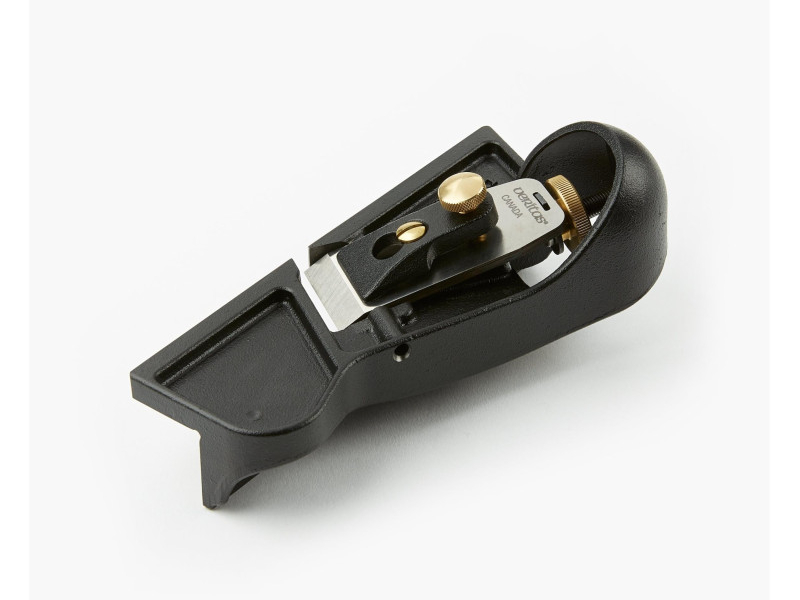


Four blued spring steel blades for the Hock scratch stock, supplied blank for shaping your own profiles.
Spare blades for the Hock scratch stock. The pack contains four blued spring steel blades. They are supplied blank, so you can file and hone the profile you need with files and slipstones, for example for beads, edge mouldings or inlay grooves.
With several blades you can keep different profiles ready and swap as needed.
Specifications: 4 blades, blued spring steel, 0.050" × 3/4" × 1 3/4" (1.3 × 19 × 44 mm). Fits the Hock scratch stock SC075.

Data sheet
Specific References
Which plane to start with depends on what you will do, but for most people a smoothing plane (No. 4) or a jack plane (No. 5) is a good first choice. The smoothing plane gives smooth surfaces, and the jack plane is a versatile plane for both rough work and truing edges.
Low-angle jack planes such as the Lie-Nielsen No. 62 and the Veritas low-angle jack are also popular all-round planes. A block plane is a good addition for end grain and chamfers. The guide explains how the hand plane is built and which types exist.
Planes of cast iron and steel rust easily, especially in unheated workshops and from moisture on your hands. Wipe the plane after use and protect bare surfaces with a thin layer of wax or oil that will not mark the wood.
Store your planes dry, ideally in a plane sock or box. If rust has already formed, the guide shows how to clean and protect them.
A card scraper is a thin steel plate that scrapes smooth surfaces, especially on difficult wood. It is sharpened in three steps: the edge is filed straight, honed smooth and then turned into a small burr with a burnisher. The burr is what cuts.
When the scraper stops making shavings, you can often turn the burr again with the burnisher. The guide shows it step by step.
Four blued spring steel blades for the Hock scratch stock, supplied blank for shaping your own profiles.