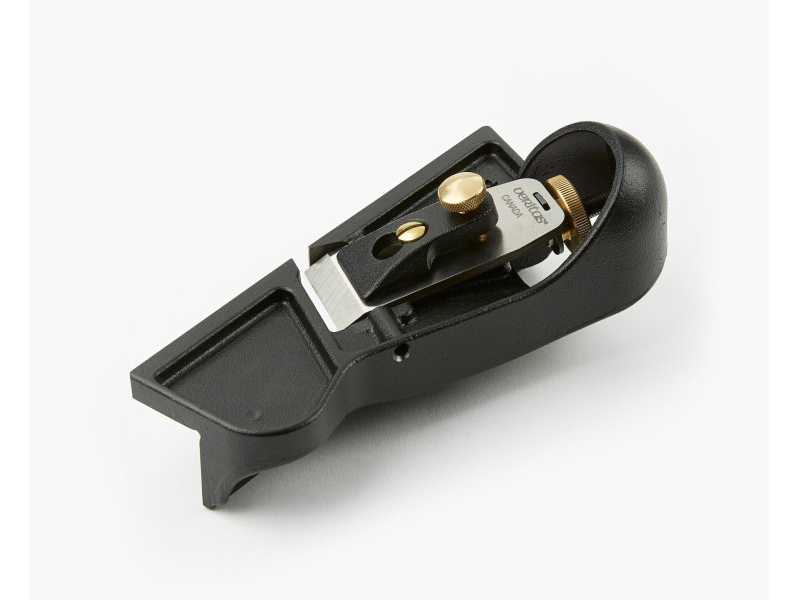


Designed for one-handed use, this small scraping plane has an articulating palm rest for comfortable, controlled grip. This allows it to be positioned to suit your preferred grip in either hand, or for knuckle clearance when working close to an adjacent surface.
Designed for one-handed use, this small scraping plane has an articulating palm rest for comfortable, controlled grip. This allows it to be positioned to suit your preferred grip in either hand, or for knuckle clearance when working close to an adjacent surface.
The 2" wide, 0.040" thick, high-carbon-steel blade occupies the full width of the plane body, permitting clean, accurate cuts flush against a perpendicular surface. A set screw lets you bow the blade to make fine depth-of-cut adjustments and to prevent blade corners from leaving ridges in the work. The blade is ground at 45°, allowing you to easily burnish a hook.
A fixed frog sets the blade at 20°, the optimum angle for fine scraping. The edges of all gripping surfaces are chamfered for comfort, as is the leading edge of the lapped sole, preventing it from catching or marring work. The 5 1/4" long ductile cast iron body weighs 1 1/2 lb.
The plane is supplied without a blade; choose a blade separately.

Specific References
Which plane to start with depends on what you will do, but for most people a smoothing plane (No. 4) or a jack plane (No. 5) is a good first choice. The smoothing plane gives smooth surfaces, and the jack plane is a versatile plane for both rough work and truing edges.
A block plane is a good addition for end grain and chamfers. The guide explains how the hand plane is built and which types exist.
Planes of cast iron and steel rust easily, especially in unheated workshops and from moisture on your hands. Wipe the plane after use and protect bare surfaces with a thin layer of wax or oil that will not mark the wood.
Store your planes dry, ideally in a plane sock or box. If rust has already formed, the guide shows how to clean and protect them.
A card scraper is a thin steel plate that scrapes smooth surfaces, especially on difficult wood. It is sharpened in three steps: the edge is filed straight, honed smooth and then turned into a small burr with a burnisher. The burr is what cuts.
When the scraper stops making shavings, you can often turn the burr again with the burnisher. The guide shows it step by step.
Most products are restocked on an ongoing basis, but delivery times from the manufacturer vary. When an item is out of stock, the button Notify me when available appears on the product page.
Click the button and enter your email address, and we will email you as soon as the item is back in stock. If you want to know when the next delivery is expected, you are welcome to contact us.
Designed for one-handed use, this small scraping plane has an articulating palm rest for comfortable, controlled grip. This allows it to be positioned to suit your preferred grip in either hand, or for knuckle clearance when working close to an adjacent surface.