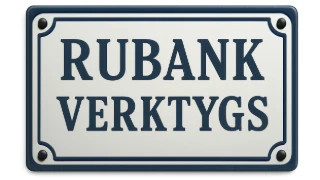
A sliding bevel takes an angle from a drawing or workpiece and transfers it to another. It has no scale, so what matters is that it locks firmly: an angle that creeps gives the wrong result. To read or set an angle in degrees, use a protractor or a bevel setter.
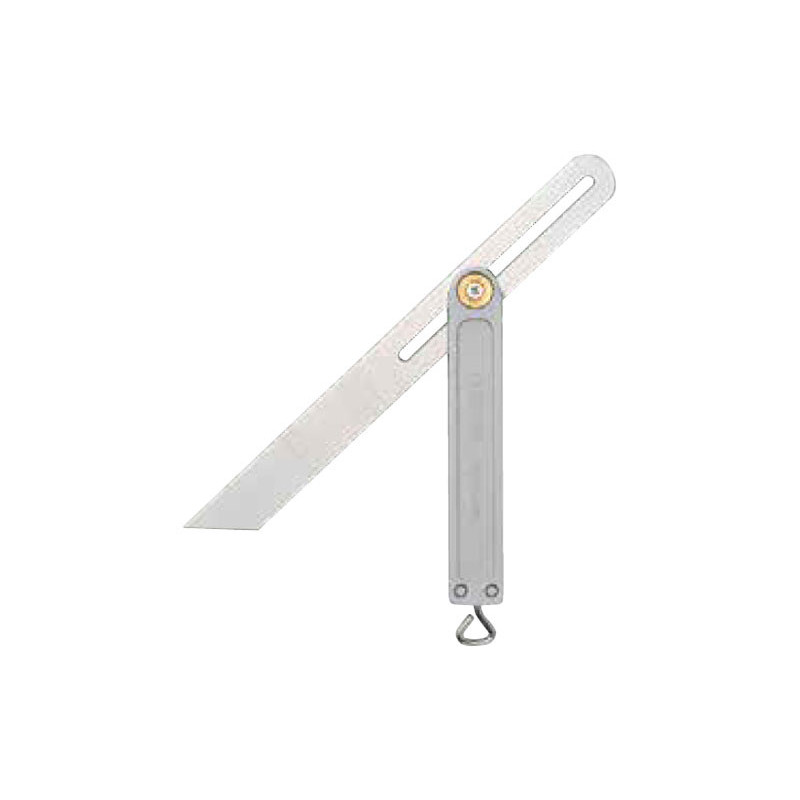
The sliding bevel
A sliding bevel can be set to any angle and is used to scribe and draw angles, for example dovetails. On the Shinwa SB-8 the locking screw sits at the back end, where it is out of the way, and the stainless steel blade sits in a light, stable aluminium stock.
Three ways to work with angles
Transfer
The sliding bevel copies an angle from one piece to another, without a scale.
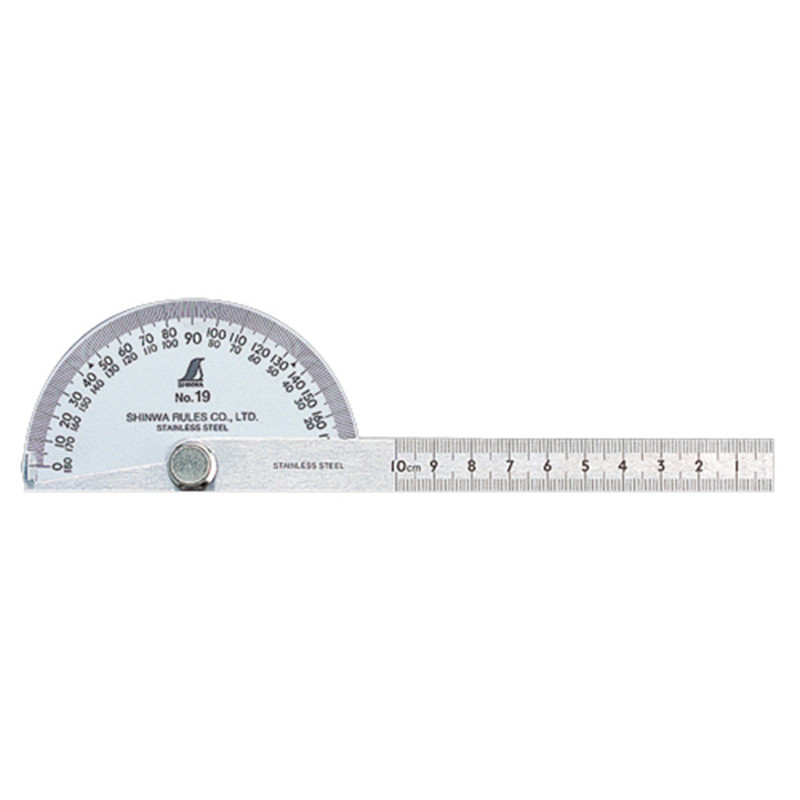
Measure
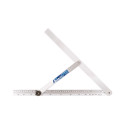
The protractor has a semicircular scale and a blade that locks at the right angle.
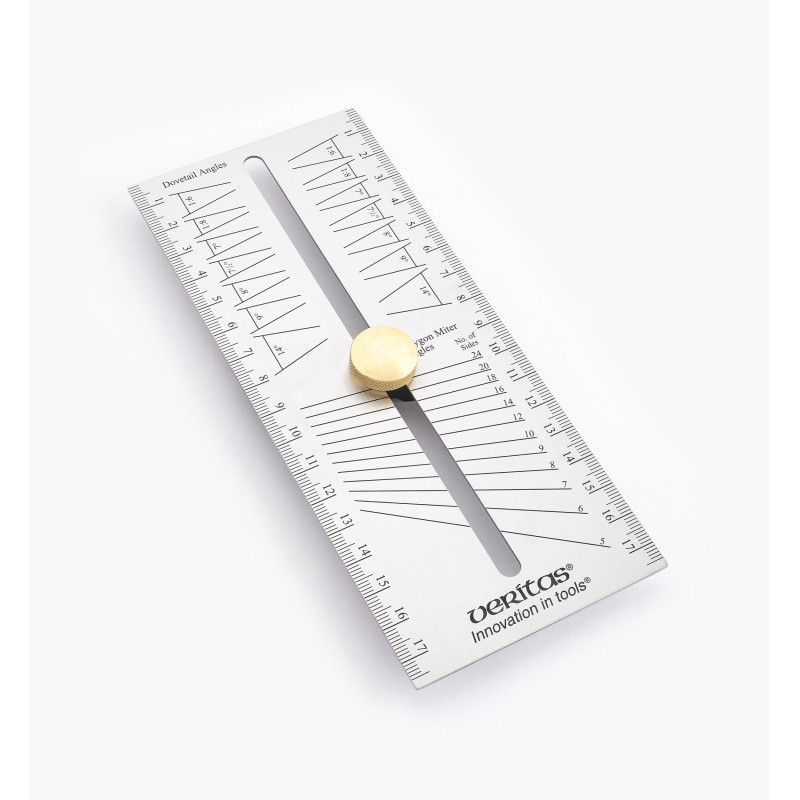
Set
A bevel setter sets exact angles on the sliding bevel and reads angles already set.
Setting the bevel exactly
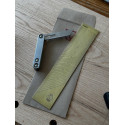
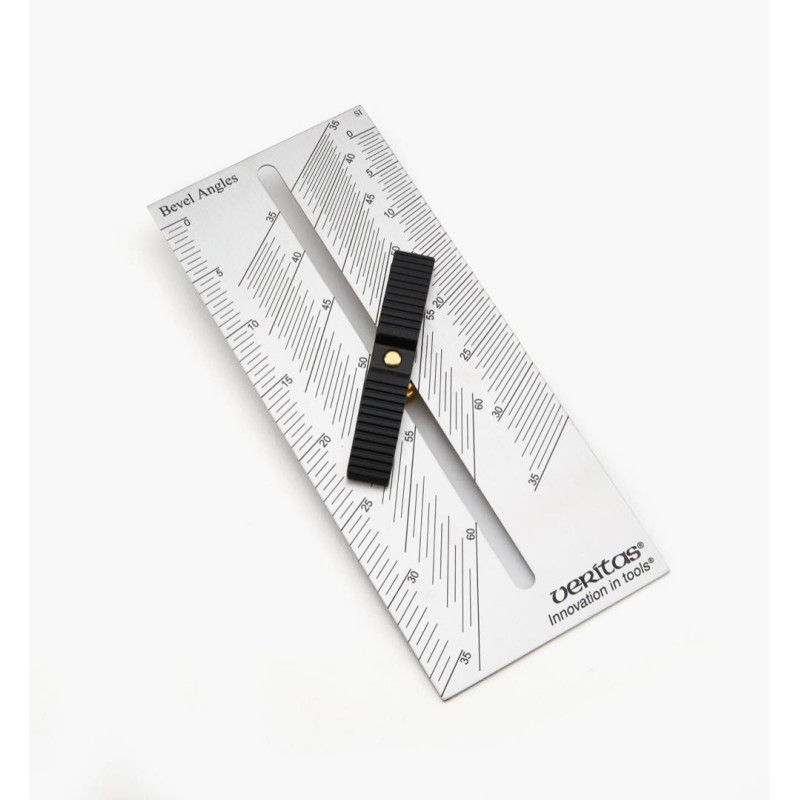
A sliding bevel is excellent for transferring angles but not for reading them. With the Veritas bevel setter you set exact angles from 0 to 60° in 1/2° steps; common dovetail and polygon angles are marked on the back. It is both easier to use and more accurate than a protractor for this job.
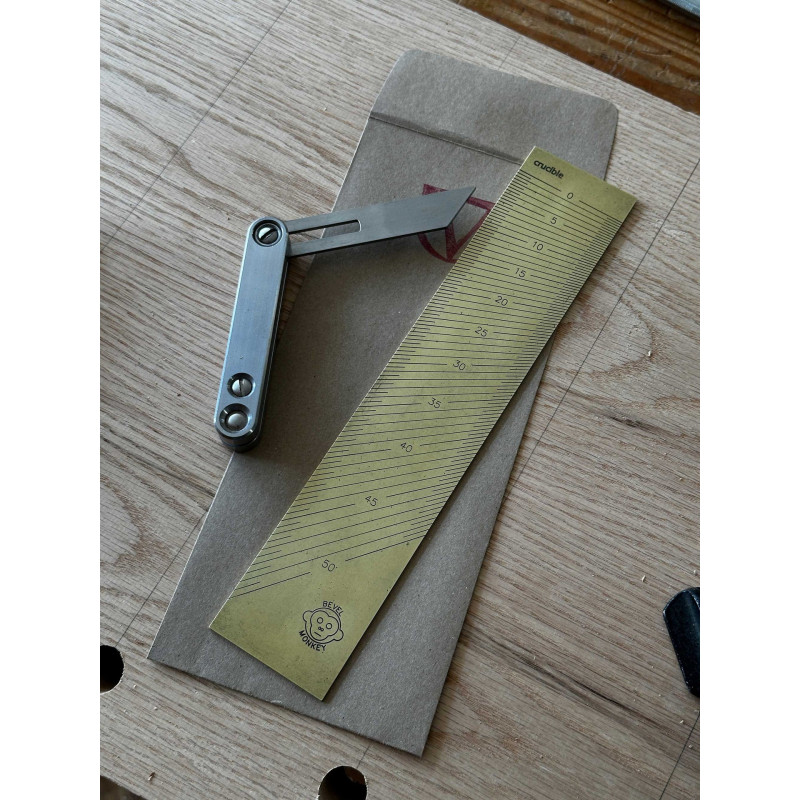
The Crucible Brass Bevel Monkey is graduated from 0 to 50° with half-degree marks, so you can easily estimate a quarter of a degree.
Which tool should I choose?
Sliding bevel
200 mm, stainless blade.
Shinwa SB-8
Protractor
90 mm head, non-glare chrome.
Shinwa No. 19
Bevel setter
0–60° in 1/2° steps, metric rule.
Veritas bevel setter
Brass gauge
0–50° with half-degree marks.
Bevel Monkey
What is the difference between a sliding bevel and a protractor?
What should I look for in a sliding bevel?
How do I set a sliding bevel to an exact angle?
See the full range: Sliding Bevels and Protractors
Share this content