- Out-of-Stock


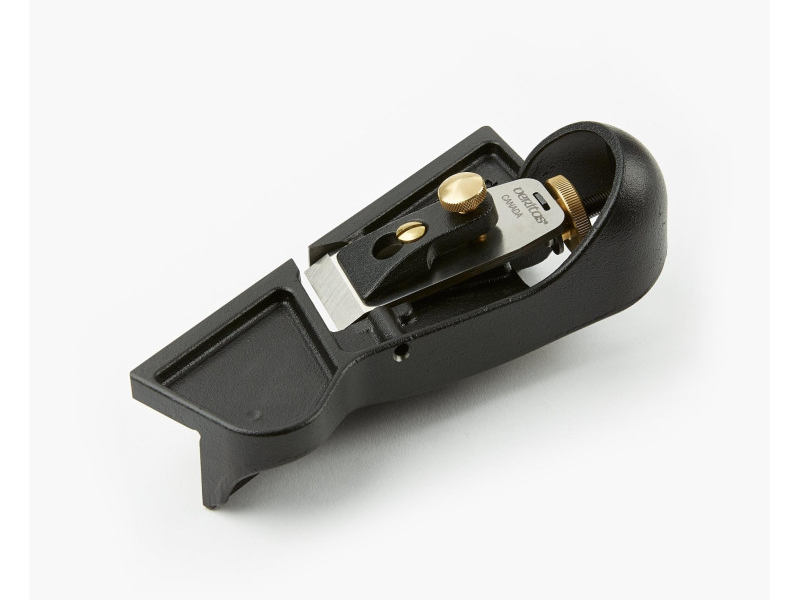
Blade for Krenov-style wooden planes, 1 3/4" wide by 4 1/2" long. These blades were developed by HOCK in collaboration with the faculty and staff at James Krenov's fine woodworking school in Fort Bragg, California. 3/16" thick, they won't deflect or chatter under the toughest use.
Blade for Krenov-style wooden planes, 1 3/4" wide by 4 1/2" long.
These blades were developed by HOCK in collaboration with the faculty and staff at James Krenov's fine woodworking school in Fort Bragg, California. 3/16" thick, they won't deflect or chatter under the toughest use. Designed specifically for the finely tuned handmade wooden plane. Bevel is 30°. They come complete with chip breaker and assembly screw.

Specific References
There are several good ways to sharpen chisels and plane irons: water stones, diamond stones, oil stones and sharpening machines such as Tormek. All give sharp edges, but they differ in speed, maintenance and price.
A honing guide makes it easier to keep the same angle every time. The most important thing is to find a method you enjoy and use often. The guide helps you choose.
Planes of cast iron and steel rust easily, especially in unheated workshops and from moisture on your hands. Wipe the plane after use and protect bare surfaces with a thin layer of wax or oil that will not mark the wood.
Store your planes dry, ideally in a plane sock or box. If rust has already formed, the guide shows how to clean and protect them.
A new replacement iron can make an old plane better than it was when new. To find the right one, measure the iron's width, thickness and slot dimensions, and check whether the plane has a cap iron and what kind of adjuster it has.
A thicker iron chatters less but may require the mouth to be adjusted. The guide shows how to measure and choose correctly. You can also send us a photo of the iron with a rule beside it, and we will help you. We do not sell adjusting screws or other spare parts for old Stanley planes.
You might also like
Blade for Krenov-style wooden planes, 1 3/4" wide by 4 1/2" long. These blades were developed by HOCK in collaboration with the faculty and staff at James Krenov's fine woodworking school in Fort Bragg, California. 3/16" thick, they won't deflect or chatter under the toughest use.