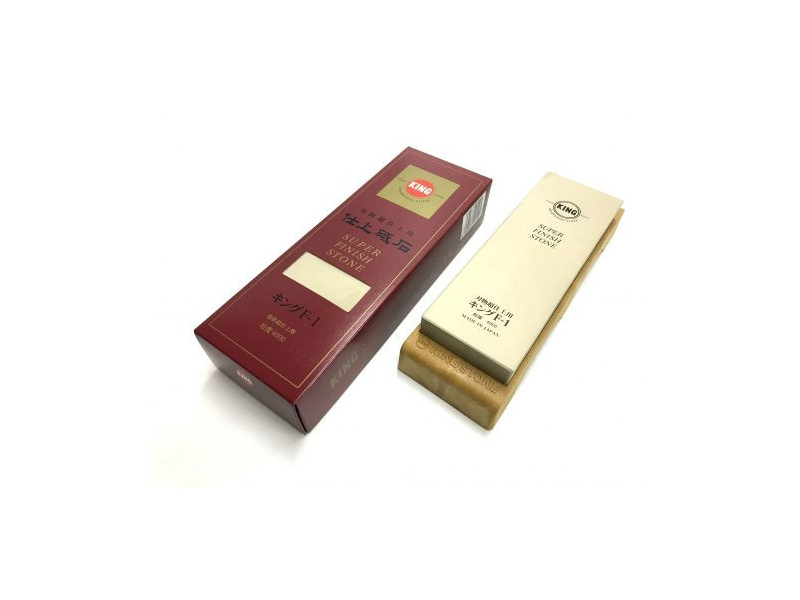


Naniwa Super Stone (S2-480), 8000 grit water stone, 20 mm high. Naniwa sharpening stones are produced to a high and consistent standard, with extensive quality control in Japan. Naniwa has therefore been a top brand for years and is very popular among sharpening enthusiasts. Size 210 × 70 × 20 mm.
Naniwa Super Stone (S2-480), 8000 grit water stone, 20 mm high. Naniwa sharpening stones are produced to a high and consistent standard, with extensive quality control in Japan. Naniwa has therefore been a top brand for years and is very popular among sharpening enthusiasts.
Size 210 × 70 × 20 mm.

Data sheet
Specific References
It depends on which series the stone belongs to:
Super Stone / Superstone (S1, S2) – do not soak. Splash water on the surface and sharpen (splash and go). Prolonged soaking can damage the stone.
Professional – does not need soaking. Wet the surface and keep it wet while sharpening.
Traditional and Aotoishi – soak the water stone for 10–15 minutes, until the bubbles stop.
Always let the stone dry at room temperature after use, not in the sun or on a radiator.
The grit indicates how coarse or fine the sharpening stone is. The lower the number, the coarser the stone:
220 – for repairing damaged or very dull edges and changing the bevel angle
1000 – basic sharpening, the most important stone if you only have one
1500–3000 – an intermediate step that gives a keener edge
5000–8000 – fine honing to a very sharp edge
10000–12000 – polishing to a mirror finish
A good start is a 1000 stone and a fine stone of 5000–8000. The 220/1000 and 1000/3000 combination stones give two grits in one stone.
The Naniwa Superstone comes in two thicknesses with the same abrasive and grits:
S1 – 10 mm thick, lighter and less expensive
S2 – 20 mm thick, lasts about twice as long
Both measure 210 × 70 mm and sharpen in the same way, so the choice is about how long the stone should last. If you sharpen often, the thicker S2 pays off. Neither should be soaked. To keep the stone steady you can use the Naniwa stone holder, which fits stones 136–218 mm long.
A nagura stone is a small stone that you rub on the surface of a wet fine stone before you start sharpening. It raises a fine slurry that helps the stone polish the edge, especially on very fine stones that can otherwise feel slick.
The Naniwa nagura stone is most useful on the Professional series and on finer Naniwa stones of 5000 grit and up. It also cleans the surface and makes the stone cut more evenly. The nagura stone measures 70 × 51 × 35 mm.
There are several good ways to sharpen chisels and plane irons: water stones, diamond stones, oil stones and sharpening machines such as Tormek. All give sharp edges, but they differ in speed, maintenance and price.
A honing guide makes it easier to keep the same angle every time. The most important thing is to find a method you enjoy and use often. The guide helps you choose.
Which water stone you need depends on how dull your edges are and how fine a finish you want. A common setup is a coarse stone around 1000 grit to shape the edge and a fine stone around 5000–8000 grit to polish it. For chipped edges you need a coarser stone too.
Water stones wear unevenly and need flattening regularly. The guide explains grits, brands and flattening.
You might also like
Naniwa Super Stone (S2-480), 8000 grit water stone, 20 mm high. Naniwa sharpening stones are produced to a high and consistent standard, with extensive quality control in Japan. Naniwa has therefore been a top brand for years and is very popular among sharpening enthusiasts. Size 210 × 70 × 20 mm.