- Out-of-Stock


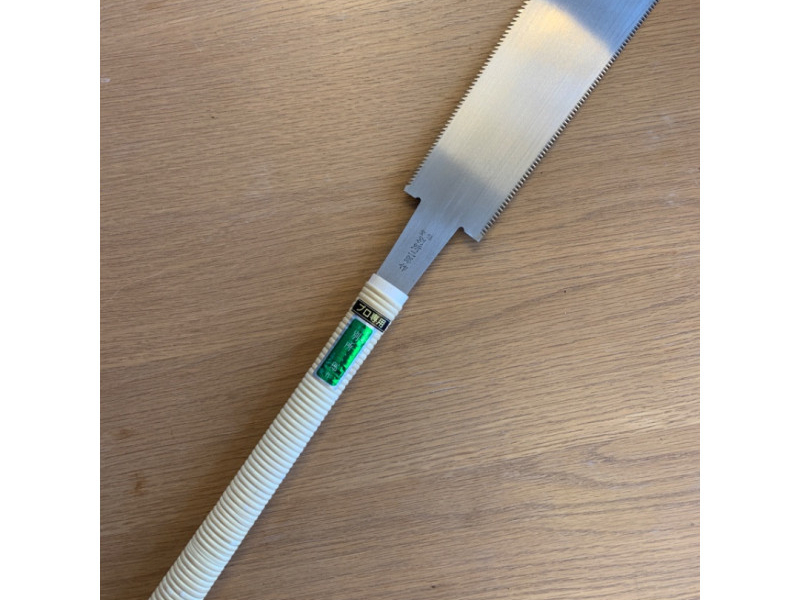
Hishika ryoba saw with a 240 mm blade. The ryoba has teeth on both edges of the blade, rip teeth on one side and crosscut teeth on the other. Hishika saws feature a handmade blade, hardened piece by piece by hand as has been done traditionally in Japan for centuries.
Hishika ryoba saw with a 240 mm blade. The ryoba has teeth on both edges of the blade, rip teeth on one side and crosscut teeth on the other.
Hishika saws feature a handmade blade, hardened piece by piece by hand as has been done traditionally in Japan for centuries. The whole blade is hardened to have flexibility as well as hardness. The blade thickness tapers towards the back to produce friction-free strokes and the cleanest cut surfaces.
Saw type: Ryoba (Japanese double-edged pull saw)
Japanese saws cut on the pull stroke, which lets the blade be thin and give fine cuts. A dozuki has a back and suits precise cuts such as dovetails. A ryoba has teeth on both edges, crosscut and rip, and is a versatile saw. A kataba has one toothed edge without a back and handles deeper cuts. A kugihiki is a flexible flush-cut saw for plugs.
The guide explains the differences.
You might also like
Hishika ryoba saw with a 240 mm blade. The ryoba has teeth on both edges of the blade, rip teeth on one side and crosscut teeth on the other. Hishika saws feature a handmade blade, hardened piece by piece by hand as has been done traditionally in Japan for centuries.