- Only Plane/No blade


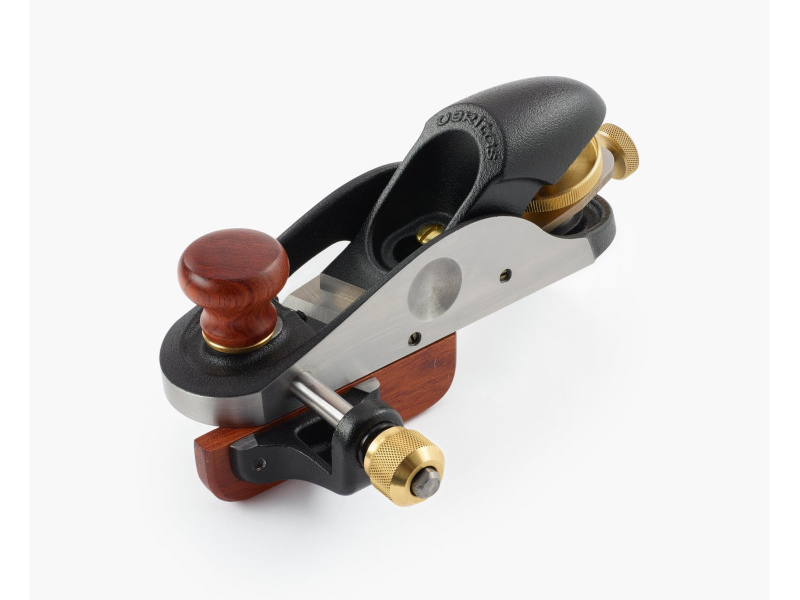
Veritas Skew Block Plane, Right-Hand, Without Blade. This is a truly versatile plane. It excels at trimming rabbets, working end grain, or making final jointing cuts on boards, plus you can use it in all the ways you would a regular block plane.
This is a truly versatile plane. It excels at trimming rabbets, working end grain, or making final jointing cuts on boards, plus you can use it in all the ways you would a regular block plane.
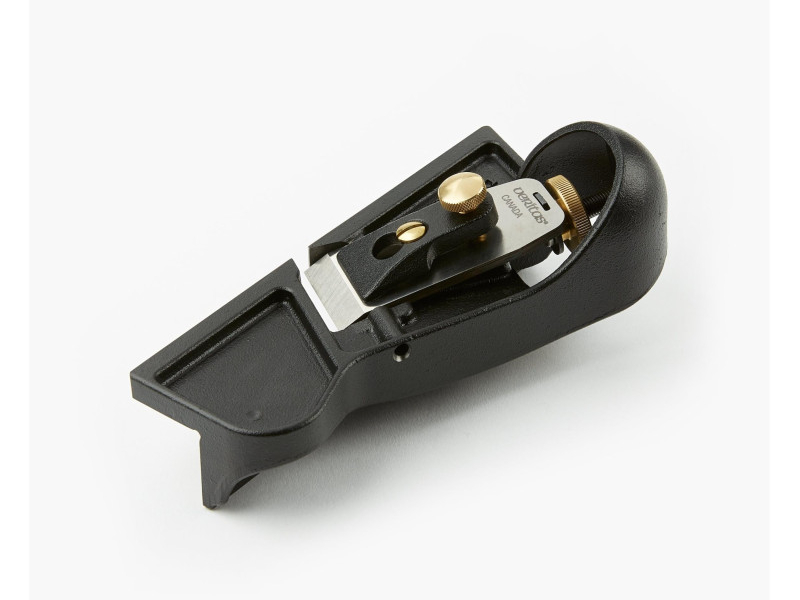
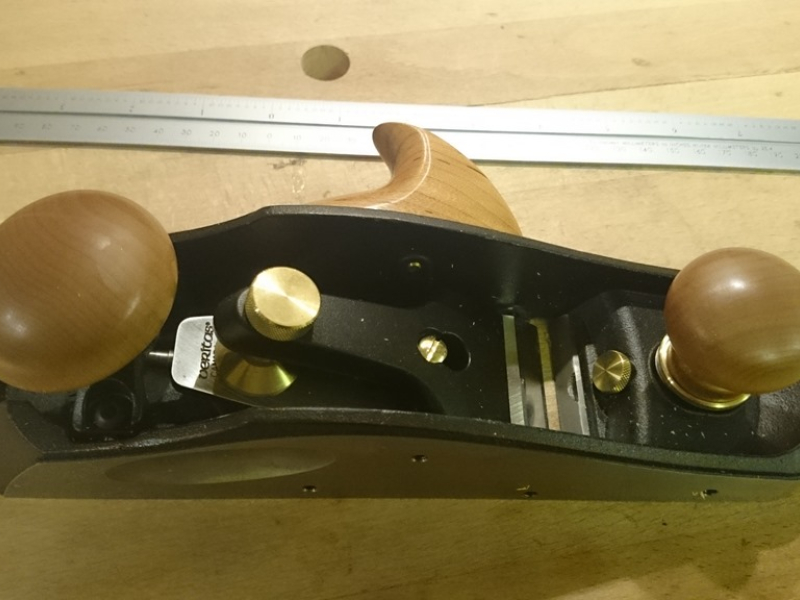
The blade is skewed at a 15° angle, which makes cutting easier, either with or across the grain, and helps pull the fence tight against the work. Because the blade sits flush with the side of the body, corner cuts are clean and accurate. A Norris-style adjuster combines feed and lateral positioning for easy, precise blade setting. Set screws on either side of the blade prevent the blade from shifting in use. A scoring spur ahead of the blade reduces tear-out on cross-grain work; it is adjustable for depth and projection and can be recessed when working with the grain.
Machined and surface ground, the contoured 6 3/8" × 1 3/4" ductile cast iron body has a 12° bed angle and a movable toe fully enclosed by the body casting. A hardwood locking knob sets the toe to control the mouth opening, while an unobtrusive set screw in the throat allows repeatable mouth positioning and prevents contact between the blade and toe. Held by a large brass locking knob, a sliding collet allows adjustment of the 3 1/2" wide, 5/16" thick hardwood fence. The fence base is tapped to substitute a user-made fence extension such as a wooden wedge for cutting controlled bevels.
The plane is available in left- and right-hand models (neither is for left- or right-handed use only, but having both lets you handle any grain direction). The plane is supplied without blade. Matching lapped blades, 1/8" thick and 1 1/2" wide with a 25° bevel, are available in A2, O1 and PM-V11 and sold separately.
Optional 3 1/2" stainless-steel fence rod and depth stop sold separately.

Data sheet
Specific References
Most products are restocked on an ongoing basis, but delivery times from the manufacturer vary. When an item is out of stock, the button Notify me when available appears on the product page.
Click the button and enter your email address, and we will email you as soon as the item is back in stock. If you are logged in, your email address is registered automatically. If you want to know when the next delivery is expected, you are welcome to contact us.
How often items are restocked depends on the supplier. We receive deliveries from Veritas about once a month, Lie-Nielsen ships in batches and we order from Incra about once a year. You can also add the item to a wishlist in your account, where you can see whether it is in stock.
Which plane to start with depends on what you will do, but for most people a smoothing plane (No. 4) or a jack plane (No. 5) is a good first choice. The smoothing plane gives smooth surfaces, and the jack plane is a versatile plane for both rough work and truing edges.
Low-angle jack planes such as the Lie-Nielsen No. 62 and the Veritas low-angle jack are also popular all-round planes. A block plane is a good addition for end grain and chamfers. The guide explains how the hand plane is built and which types exist.
Planes of cast iron and steel rust easily, especially in unheated workshops and from moisture on your hands. Wipe the plane after use and protect bare surfaces with a thin layer of wax or oil that will not mark the wood.
Store your planes dry, ideally in a plane sock or box. If rust has already formed, the guide shows how to clean and protect them.
You might also like
Veritas Skew Block Plane, Right-Hand, Without Blade. This is a truly versatile plane. It excels at trimming rabbets, working end grain, or making final jointing cuts on boards, plus you can use it in all the ways you would a regular block plane.