- Out-of-Stock


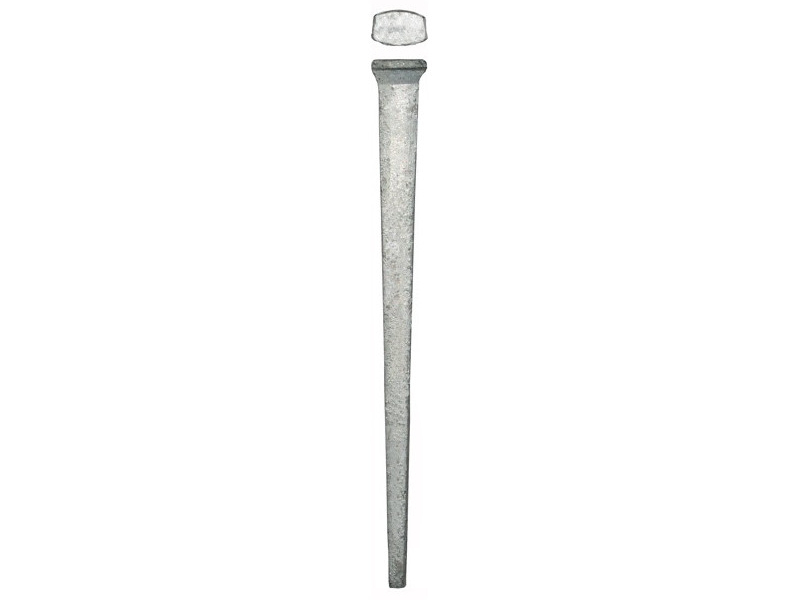
Tremont Nail Company cut nail, made the traditional way. Type: clinch rosehead nail, 3-1/2" (89 mm). These button-head nails are malleable enough to be clinched if desired.
Tremont Nail Company cut nail, made the traditional way. Type: clinch rosehead nail, 3-1/2" (89 mm). These button-head nails are malleable enough to be clinched if desired. Often used for furniture repair, cabinet work, interior walls, face-nailing wide board flooring, batten doors, paneling and countertops. Sold individually.
Tremont makes cut nails in the traditional way in many types. Some common choices:
Common nail – framing, rough carpentry and face-nailing floors and panelling
Flooring nail – hardened, for blind-nailing tongue-and-groove hardwood floors
Rosehead nail – a button-shaped head, for furniture, cabinets, panelling, doors and wide floorboards
Fine finish nail and brad – a small, discreet head, for mouldings and joinery
Boat nail – hot-dip galvanized, for boat building
Masonry nail – hardened, for fixing into mortar
All Tremont nails are sold individually, so you can buy exactly the number you need.
A cut nail is wedge-shaped with a blunt tip that cuts the fibres instead of wedging them apart. It holds well and is less likely to split the wood, if you orient it correctly:
Place the wider face of the nail parallel to the grain, so the wedge shape does not push the fibres apart
Pre-drill in hard wood and near ends and edges, with a hole slightly smaller than the nail's thickness
Do not nail too close to end grain
Rosehead nails are soft enough to be clenched, that is, bent over on the back, for extra holding power.
Cut nails are wedge-shaped nails cut from steel plate. The wedge profile pushes the wood fibres apart instead of splitting them, so they hold very well. Cut nails are used when restoring older houses and furniture, for floors and joinery, and wherever a traditional look is wanted.
Orienting the nail correctly to the grain reduces the risk of splitting. The guide tells you more.
Tremont Nail Company cut nail, made the traditional way. Type: clinch rosehead nail, 3-1/2" (89 mm). These button-head nails are malleable enough to be clinched if desired.