- Slut i Lager

You don't have to be a highly skilled woodworker to make a chair. And you don't have to be insanely wealthy to own a nice one, either.
The truth is that everyday woodworkers – farmers, amateurs and people in other trades – made wonderful chairs using common woodworking tools and whatever wood was available: dry, wet, soft, hard or the branches plucked from a tree.
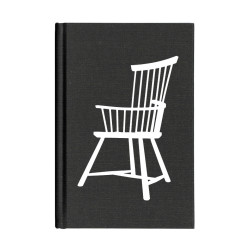
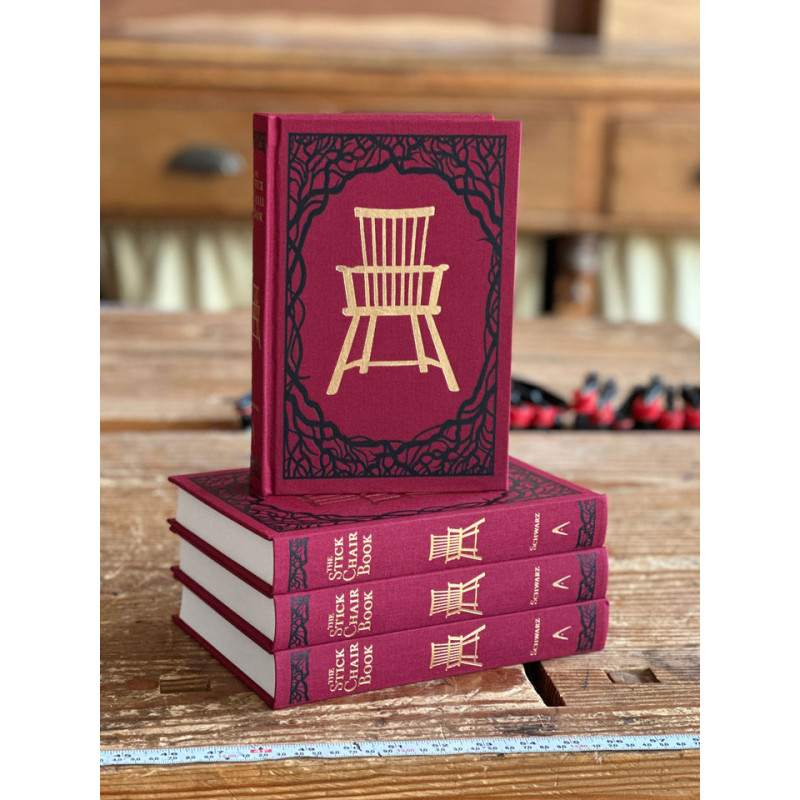
“The Stick Chair Book: 2nd Revised Edition” explores the craft of “hedge carpenters” who built chairs for the everyday home. The chairs they made weren’t designed to impress the gentry – they were designed to be comfortable, stout and (if you have a good eye) nice to look at.
After 22 years of building vernacular stick chairs and studying historical examples in the U.K., Europe and North America, author Christopher Schwarz has figured out how anyone can design and build these chairs without a lot of gear or specialty jigs.
He compressed that knowledge into the smallest package possible. Just 96,000 words (that's less than a typical bodice-ripping beach read) on 568 pages measuring 6" x 9". With hundreds of illustrations and clear photos.
With the help of the book, you can go to any lumberyard to get the wood. You can use tools that you probably already own. And you can use basic layouts – you don't need to understand trigonometry or compound angles to make these chairs.
“The Stick Chair Book: 2nd Revised Edition” is divided into three sections. The first section, “Thinking About Chairs,” introduces you to the world of stick chairs, plus the tools and wood to build them.
The second section, “Chairmaking Techniques,” covers every process in making a chair, from cutting stout legs, to making curved arms with straight wood, to carving the seat. Plus, you’ll get a taste for the wide variety of shapes you can use. The chapter on seats shows you how to lay out 14 different seat shapes. The chapter on legs has 16 common forms that can be made with only a couple handplanes. Add those to the 11 different arm shapes, six arm-joinery options, 14 shapes for hands, seven stretcher shapes and 11 combs, and you could make stick chairs your entire life without ever making the same one twice.
The final section offers detailed plans for five stick chairs, from a basic Irish armchair to a dramatic Scottish comb-back. These five chair designs are a great jumping-off point for making your own stick chairs – the ultimate goal of the book. Like people, no two stick chairs are exactly alike.
Additional chapters in the book cover chair comfort, finishing and sharpening the tools.
Du kanske också gillar